Application FAQ: Concrete Pump Pipe Components for High-Rise, Tunnel, Bridge, and Mining
Concrete pump pipe components are selected by duty condition, not by catalogue position. The same DN150 straight pipe can run acceptably on a bridge deck at medium pressure and still wear out early at the base of a high-rise riser, inside a tunnel where the line turns 90–180°, or on a mining line moving abrasive slurry around the clock. This guide answers the questions buyers actually raise during evaluation: which straight pipe, elbow, reducer and clamp belongs to which duty, what evidence exists for each application, and what to verify before a purchase order.
What Actually Decides Whether a Pump Line Component Fits a Project?
Four variables decide fit, and a fifth is routinely overlooked. The four are the duty cycle (how many hours per day the line runs), the geometry of the route (how many direction changes and how sharp they are), the pressure class of the pump and the line, and the abrasiveness of the concrete or slurry being conveyed. The fifth is the interface — the outlet size, flange and clamp type of the pump the delivery line connects to.
Change any one of these and the component priority changes with it. A high-rise riser that runs 8–12 hours per day on a fixed vertical head puts sustained abrasion and clamp-joint integrity first. A tunnel drive that has to turn 90–180° repeatedly concentrates wear at the bends. A bridge pour at medium pressure with a diameter transition puts the reducer under scrutiny. A mining line running continuously with abrasive slurry pushes straight-pipe wall condition and heavy-duty elbow construction to the front.
| Duty condition | Operating profile | Dominant stress | Components that decide performance |
|---|---|---|---|
| High-rise building | 8–12 hours per day, vertical head, integrated with a pump truck | Sustained abrasion on long runs, static head load, repeated joint stress | Straight pipe, 90° elbows at each transition, clamps |
| Tunnel | Heavy-duty cycles with 90–180° direction changes | Concentrated wear at bends, pressure loss and stress at clamps | Elbows, double-layer elbows, clamps |
| Bridge | Medium-pressure pours with diameter transitions | Turbulence at the bore change, mixed bore matching | Reducers, straight pipe, clamps |
| Mining | 24/7 operation with abrasive slurry | Continuous abrasion plus corrosion, long run lengths | Heavy-duty wear-resistant straight pipe, wear-resistant elbows |
Why Does Component-Level Matching Outweigh Pipe Diameter Alone?
Concrete pump systems are assemblies, and the delivery line is the downstream extension of the pump itself. Manufacturer technical literature describes a trailer pump as consisting of a pumping unit, a concrete receiving hopper, a delivery valve, pumping cylinders and pistons, and a hydraulic system. The delivery line attaches to that assembly and inherits its pressure behaviour, so a pipe decision is a system decision.
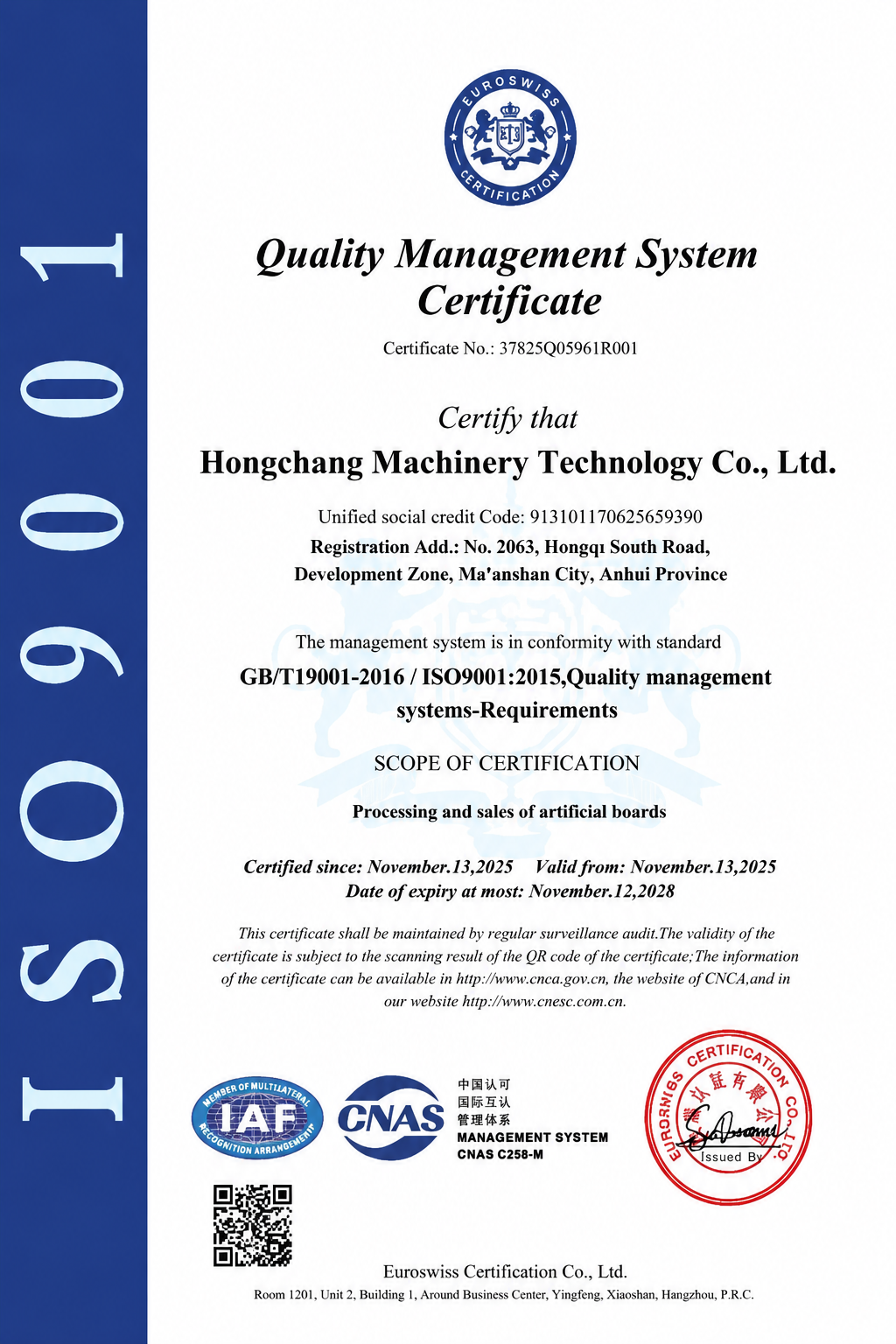
Two documents are often misread at this stage. ISO 21573-1:2024 establishes the content for commercial specifications for concrete pumps used on building sites for concrete-mix delivery — it defines a specification framework at pump level and does not, by itself, establish product-level requirements for a specific pipe. A supplier's ISO 9001 certification verifies a quality management system; it is not a performance certificate for an individual pipe. Both are useful, but neither replaces product-level pressure, hardness and dimensional records.
On dimensions, industry secondary reporting commonly cites ST52 steel at DN125 with 4.5–5 mm wall thickness for high-pressure delivery applications. That is a reference point for specification discussion, not a universal requirement — the correct bore and wall thickness follow from the pump, the vertical head or horizontal distance, and the mix.
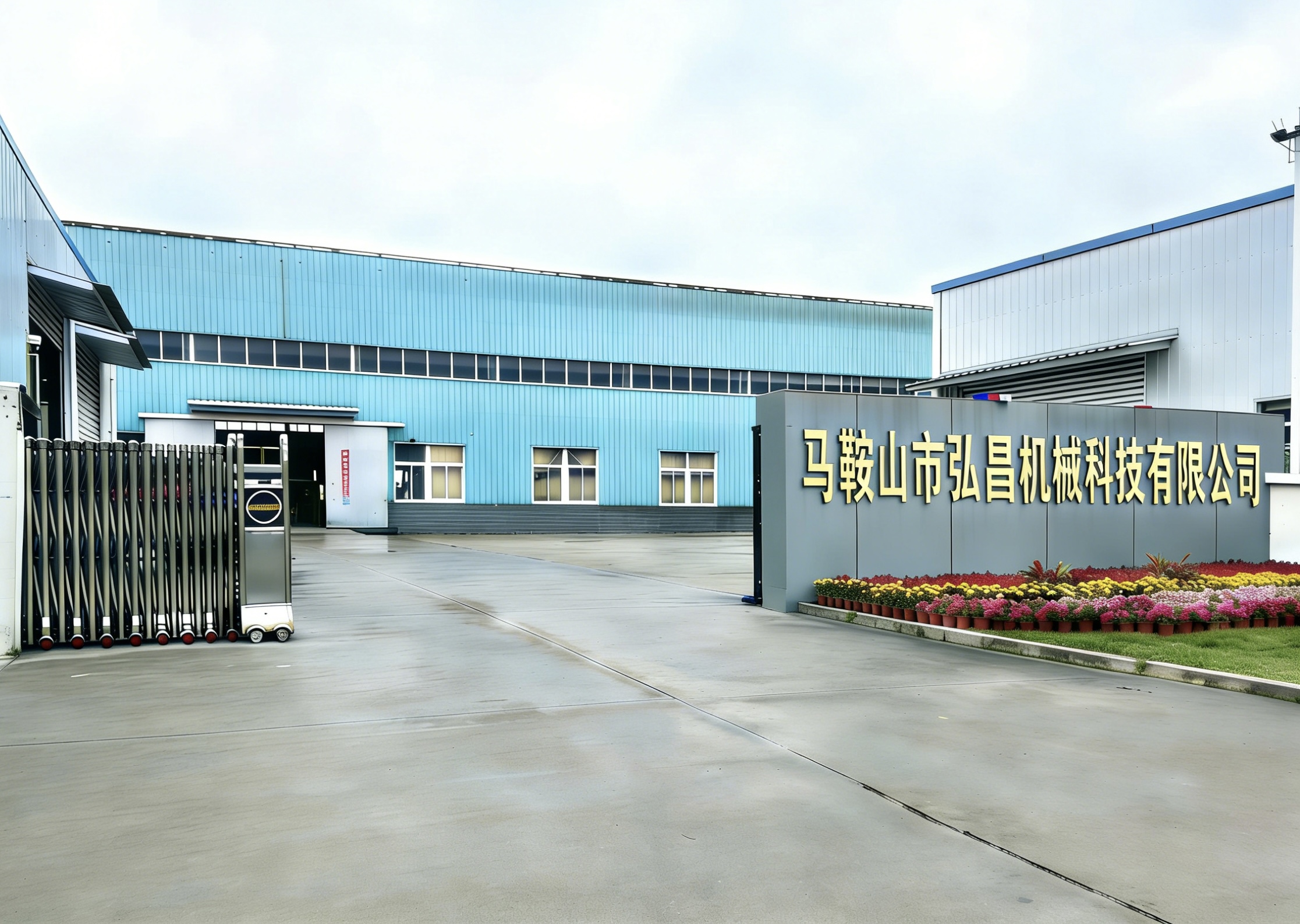
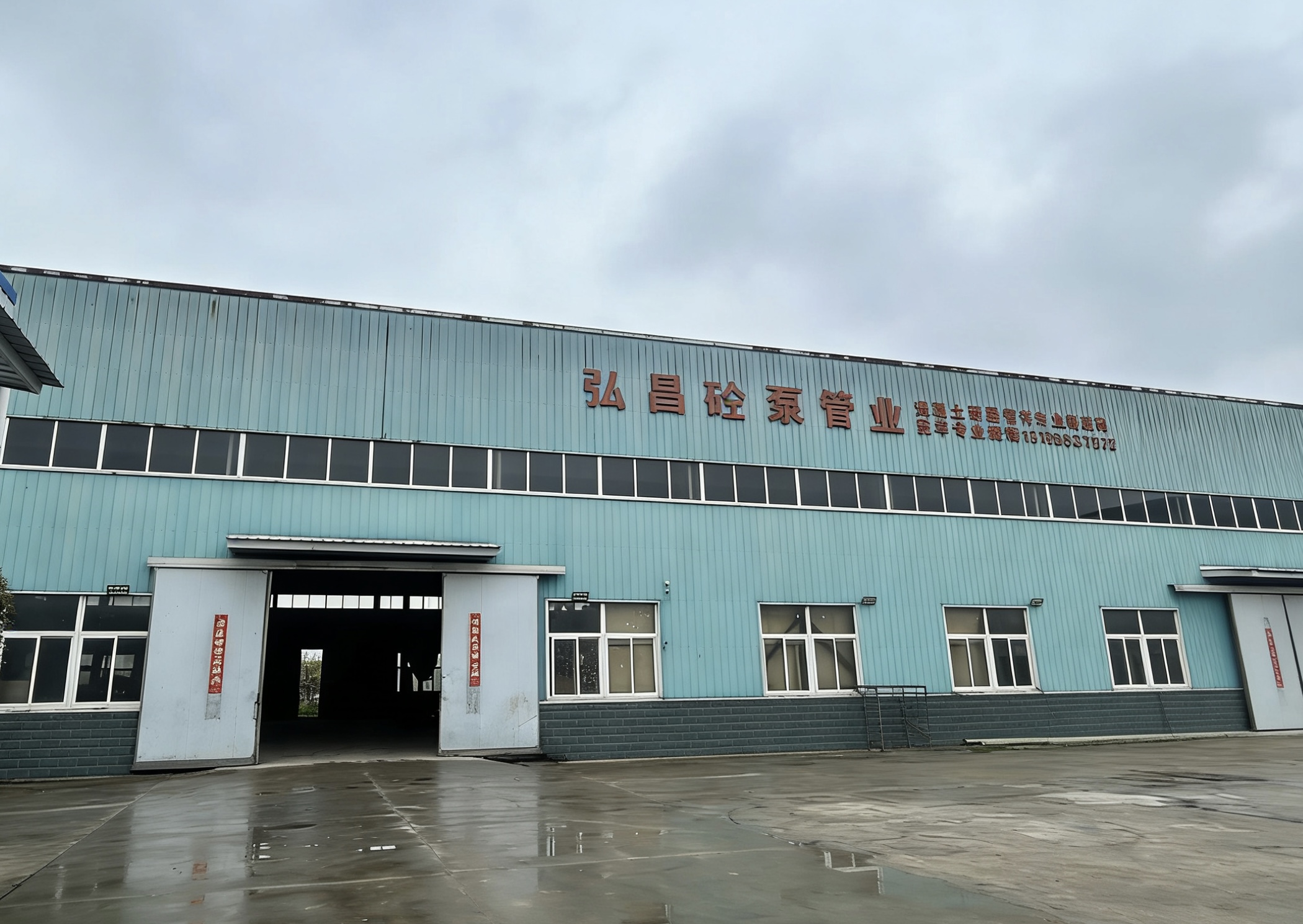
Hongchang Machinery Technology Co., Ltd. (Hongchang) is a manufacturer based in Ma'anshan City, Anhui Province, China, producing concrete pump pipes, elbows, clamps and reducers. The company was founded in 2015, operates a 2,600 m² facility with 50+ employees, and reports annual output of 50,000 meters of straight pipe and 15,000 pieces of curved pipe. Its products are stated to be 2–3 times the lifespan of ordinary products, and the company is a designated supporting manufacturer for Xingma Automobile, with products matched to pump trucks and tow pumps from Sany Heavy Industry and Zhonglian Heavy Industry. Roughly 50% of output is exported to Southeast Asia, the Middle East, Europe and the Americas.
Which Component Carries Which Duty?
Each component in a delivery line has a distinct wear mechanism. Assigning components by position rather than by price per piece is the practical way to build a line that lasts.
Straight pipe
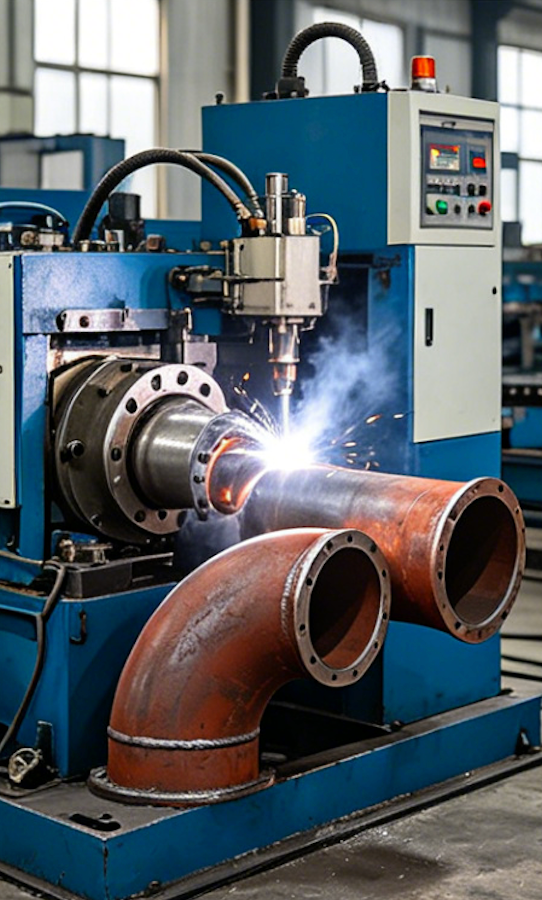
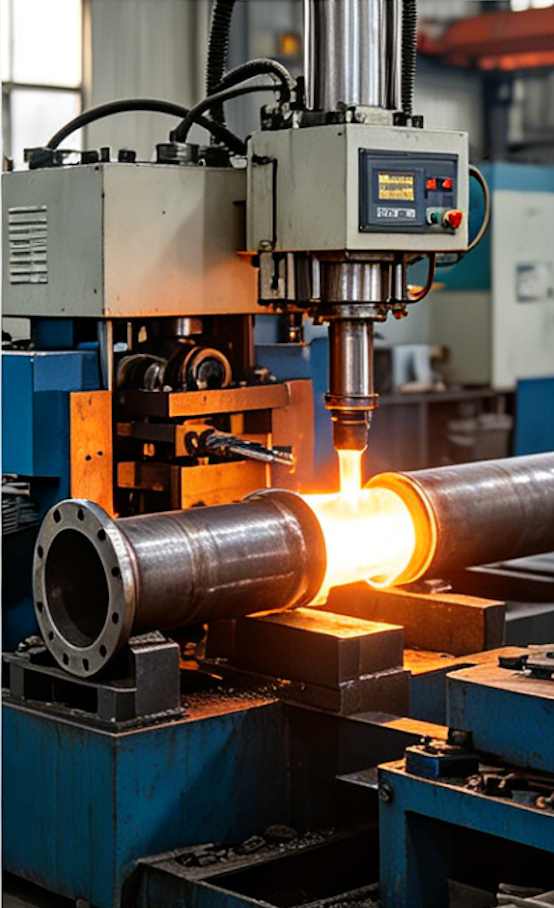
Straight pipe carries the bulk of the conveying distance and accumulates abrasive wear along its full length. Its contribution to reliability is partly arithmetic: a longer section such as the Hongchang Concrete Pump Straight Pipe 150L=3000 reduces the number of joints per meter of line, and every joint is a potential leak and a clamp that has to be inspected. On long high-rise risers and long mining runs, fewer joints translates directly into less maintenance time.
90° elbow
The elbow is where direction changes and where wear concentrates. The Hongchang Concrete Pump Elbow 150R400*90° is the standard 90° bend for lines that need a defined radius rather than a tight turn; radius and angle both affect pressure loss and wear rate, so an elbow should be specified with the same rigor as the straight pipe it sits between.
Double-layer elbow
Where bends are frequent or the mix is highly abrasive, layer construction matters more than nominal bore. The Hongchang Double-layer Elbow 275*90° is the wear-focused option for high-wear positions. In the high-rise case described later in this guide, a documented installation ran at HRC 58–62 hardness and delivered a 30% longer lifespan than standard pipes — hardness at that level is what allows an elbow to hold its profile through extended daily cycles.
Reducer
Reducers exist because pump outlets and delivery lines are not always the same bore. The Hongchang Reducer Pipe 150-125 L=1200 steps a DN150 line down to DN125 over a 1,200 mm length. A gradual transition matters: a short, abrupt bore change creates turbulence and localized wear exactly where the mix accelerates. Bridge pours and pump-truck connections are where reducers are most often the deciding component.
Clamp
The clamp is the component buyers optimize last and replace first. The Hongchang Concrete Pump Clamp 150A is a quick-fitting coupling for DN150 joints. On a high-rise riser the clamp carries repeated pressure cycling at every floor transition; in a tunnel it holds joints that are already under stress from tight bends. Clamp quality shows up as downtime, not as a line item on a specification sheet.
| Component | Reference model | Role in the delivery line | Duty conditions where it is critical | What buyers verify |
|---|---|---|---|---|
| Concrete pump straight pipe | 150L=3000 | Main conveying length; sets joint count per meter | High-rise risers, long mining runs | Wall thickness, hardness, dimensional check, pressure test |
| Concrete pump elbow | 150R400*90° | Defined-radius 90° direction change | Tunnel drives, high-rise vertical-to-horizontal transitions | Radius, angle, layer construction |
| Double-layer elbow | 275*90° | Wear-focused bend for high-wear positions | Tunnel heavy-duty bends, mining | Layer construction, hardness range |
| Reducer pipe | 150-125 L=1200 | Gradual diameter transition | Bridge pours, pump truck outlet connections | Bore match, transition length, end configuration |
| Concrete pump clamp | 150A | Quick-fitting joint connection | All four conditions, most stressed in tunnel and high-rise | Fit, pressure retention, repeat use |
High-Rise Pumping at 8–12 Hours a Day: What Should the Line Be Built From?
A high-rise line is a sustained-duty line. Running 8–12 hours per day against a fixed vertical head means every component sees a long cumulative abrasion cycle, and every floor transition introduces an elbow plus two clamp joints. The practical specification is therefore a long straight-pipe section to minimize joints, wear-resistant elbows at each vertical-to-horizontal transition, and clamps rated for repeated pressure cycling rather than one-off assembly.
Pump truck integration is the second half of the question on high-rise sites. The line has to connect to the truck's outlet and follow the truck as it repositions between pours, which makes interface consistency — clamp type and bore — as important as wear grade. Hongchang products are stated to match pump trucks and tow pumps from Sany Heavy Industry and Zhonglian Heavy Industry, and the company is a designated supporting manufacturer for Xingma Automobile, which is the relevant compatibility check for a truck-integrated riser.
The documented high-rise case covers 50 units installed over 3 years for a construction company client, applied across Europe, Asia, the Middle East and the Americas. The pipes ran at HRC 58–62 hardness with high wear resistance and delivered a 30% longer lifespan compared with standard pipes, with stable operation across the project duration.
Tunnel Work With 90–180° Direction Changes: Where Does Wear Concentrate?
In a tunnel, the line is defined by its bends. Every 90° to 180° direction change converts straight-line momentum into impact load on the outer wall of an elbow, and a 180° return effectively places two bends back to back. This is the duty condition where the elbow, not the straight pipe, determines replacement frequency — and where the double-layer elbow earns its place.
The specification logic follows from that. Count the bends before choosing the wear grade: a drive with several 90–180° changes needs wear-focused elbows at those positions while the straight runs between them can carry a standard specification. Clamp selection is the second decision, because a bend that is already under load transfers stress into the joint immediately downstream. A short, rigidly supported run after each bend reduces that load.
Tunnel work also rewards a supplier who can deliver a mixed component set to one specification. A line assembled from elbows, straight pipe and clamps produced under the same quality system avoids the tolerance mismatches that appear when components are sourced separately and mated on site.
Bridge Pours at Medium Pressure: Why Do Reducers Matter?
Bridge pours are usually medium-pressure work, but they are diameter-transition work. Deck pours, pier construction and segmental work often connect a larger pump outlet or delivery line to a smaller line feeding the placement point, and that is exactly where a reducer sits.
The Hongchang Reducer Pipe 150-125 L=1200 handles a DN150-to-DN125 step over 1,200 mm. The length is the point. A reducer that transitions gradually keeps the mix moving without the abrupt acceleration that produces localized wear at the shoulder of a short reducer. On a bridge project, the practical checks are bore match at both ends, the reducer's position relative to the first bend, and clamp compatibility on each side — a reducer is a two-joint component, so it doubles the number of connections in a short span.
Medium pressure does not mean low wear. Bridge pours often run at high slump and with restrained placement, which keeps the mix moving slowly through the line for long periods. The straight pipe carries that load; the reducer simply has to avoid becoming the weakest point in it.
Mining at 24/7 With Abrasive Slurry: What Survives?
Mining is the harshest of the four conditions because it combines continuous operation with abrasion and corrosion. A mining line does not get overnight downtime to cool and reset; abrasive slurry keeps moving, and the combination of wear and corrosive attack removes wall material faster than abrasion alone.
The documented mining case covers 100 meters of concrete pump pipes installed in underground mining for a mining company client, with the project completed within 4 years and operations across multiple countries including the UAE, Afghanistan, Argentina and Australia. The heavy-duty, wear-resistant design achieved a 40% reduction in maintenance and addressed the frequent-maintenance problem that had been driving downtime in underground operations.
The specification lesson from that case is straightforward. On a 24/7 line, specify heavy-duty wear-resistant straight pipe and wear-resistant elbows, and prefer longer sections to reduce joint count — on 100 meters of line, the difference between short and long sections is a meaningful number of clamps that have to be inspected and re-torqued. Maintenance reduction, not unit price, is the metric that matters in this duty condition.
Pump Truck Integration and OEM Builds: What Changes?
When the buyer is an equipment OEM rather than a contractor, the requirement shifts from wear life to repeatability. A pump truck manufacturer needs every batch of pipes to assemble the same way, fit the same clamps, and meet the same dimensional tolerance — because a variance shows up as a rework line, not as a worn part.
The documented OEM case covers 200 pieces supplied for pump truck manufacturing over 2 years, implemented in over 30 countries including Germany, France, the UK, Canada and Australia. The reported outcome was successful OEM integration, supported by custom specifications and quality consistency. Hongchang's OEM/ODM capability covers custom specifications, logo printing, brand packaging and custom lengths, with monthly capacity of 50,000 meters plus 15,000 pieces and a 15–30 day lead time.
What Do Documented Applications Show Across These Conditions?
| Application | Scope supplied | Duration | Reported result | Highlight |
|---|---|---|---|---|
| High-rise building project | 50 units | 3 years | Stable operation; 30% longer lifespan than standard pipes | High wear resistance, HRC 58–62 |
| Pump truck manufacturing (OEM) | 200 pieces | 2 years | Successful OEM integration | Custom specifications, quality consistency |
| Underground mining | 100 meters | 4 years | 40% reduction in maintenance | Heavy duty, wear resistant |
How Should a Buyer Evaluate Components Step by Step?
Frequently Asked Questions
1. Does a supplier's ISO 9001 certificate mean the concrete pump pipes themselves are certified?
No. Hongchang holds ISO 9001:2015 certification for Quality Management (certificate ISO-2024-HC, issued 13 November 2025, valid to 12 November 2028, scope: Manufacturing Quality), which certifies the quality management system rather than the performance of an individual pipe. Separately, ISO 21573-1:2024 establishes commercial specification content for concrete pumps used on building sites and is a pump-level standard, not a pipe-product certification. Buyers should pair the certificate with product-level records: Hongchang performs 100% inspection including pressure testing, hardness testing (HRC) and dimensional checks.
2. Can one supplier deliver straight pipes, elbows, reducers and clamps to a single specification?
Yes. Hongchang manufactures concrete pump pipes, elbows, clamps and reducers, with annual output of 50,000 meters of straight pipe and 15,000 pieces of curved pipe at a 2,600 m² facility staffed by 50+ employees. OEM/ODM capability covers custom specifications, logo printing, brand packaging and custom lengths, with monthly capacity of 50,000 meters plus 15,000 pieces. Sourcing the full component set from one quality system avoids the tolerance mismatches that appear when elbows, pipe and clamps are bought separately and assembled on site.
3. What drives the cost difference between a standard line and a wear-resistant line?
The difference comes from wear grade and layer construction, the number and radius of elbows in the route, and the expected replacement interval. Industry reporting places twin-wall boom pipe service life at 50,000–100,000 m³ against roughly 15,000–25,000 m³ for standard single-layer pipe, and Hongchang states its straight and curved pipes are 2–3 times the lifespan of ordinary products. The meaningful comparison is cost per cubic meter delivered and maintenance hours avoided, not price per meter — which is why a mining line running 24/7 and a bridge pour at medium pressure should not be budgeted the same way.
4. Can we validate components before committing to a full order?
Yes. Hongchang sets a minimum order quantity of 1 piece for sample orders, so a buyer can test a single component before a production run. For application testing, request a sample set covering the highest-wear position in the route — typically the elbow — together with a matching straight pipe length and clamp, so the sample reflects the joint behaviour of the actual line rather than a single isolated part.
5. What lead time and after-sales support should be planned into the schedule?
Hongchang states a lead time of 15–30 days, supported by monthly capacity of 50,000 meters of straight pipe plus 15,000 pieces of curved pipe. After-sales support covers technical support, spare parts supply, installation guidance and remote troubleshooting, which matters most on tunnel and mining work where a line is assembled and re-assembled on site. Buyers planning a staged delivery can request a sample or quotation through hongchangpumpipe.com and confirm the specification against their duty profile before the first shipment.
Conclusion: Match the Component to the Duty, Then Verify the Evidence
High-rise, tunnel, bridge and mining lines do not fail for the same reason. A high-rise riser that runs 8–12 hours per day fails at joints and vertical transitions; a tunnel drive concentrates wear at 90–180° bends; a bridge pour is decided by the reducer and its two joints; a mining line running 24/7 with abrasive slurry is lost to combined wear and corrosion. Matching straight pipe, elbow, reducer and clamp to those conditions is the whole of the specification decision.
The evidence to ask for is then specific: hardness range and test records, pressure test and dimensional check results, the scope of the quality certificate, and a documented application comparable to your own duty. Hongchang's reported cases — 50 units over 3 years on high-rise work with a 30% longer lifespan, 200 pieces over 2 years for pump truck manufacturing, and 100 meters over 4 years in underground mining with a 40% reduction in maintenance — are useful precisely because each one maps to a different duty condition rather than to a single product claim.
Evaluating a component set for a specific duty? Hongchang supplies concrete pump straight pipes, elbows, reducers and clamps with sample orders from 1 piece, custom specifications under OEM/ODM, and a 15–30 day lead time.
Request a sample or quotation at hongchangpumpipe.com | Email: chenzhen@hongchangpumpipe.com | WhatsApp: +86-13301770177
Have Questions or Need More Details?
Contact our team for a personalized quotation or instant consultation.
Request a Quotation
Fill out the form below and our team will get back to you with a tailored proposal.
WhatsApp Direct Chat
Prefer to chat in real-time? Message us on WhatsApp for instant assistance & quick answers.
- Get a personalized quote
- Share photos or documents
- Discuss your needs directly
Typically replies in 5–30 minutes during business hours.