Top Concrete Pump Pipe Components: Our Ranking for Durability and Fit
Top Concrete Pump Pipe Components: Our Ranking for Durability and Fit
A concrete pump delivery line is not one product. It is a chain of components — straight pipe, elbows, clamps, and reducers — and the line performs only as well as the weakest link in that chain. On most sites the failure does not happen on the long straight run. It happens at the bend that has worn through, the clamp that has separated under pressure, or the reducer that changed the flow velocity and accelerated wear in the section behind it.
This article ranks the four core components of a concrete pump pipe system by the specification attention they deserve for durability and fit. It is not a market-share table and it is not a popularity list. Every position is tied to checkable facts: materials and hardness, model designations, construction method, production data, and the duty each component actually sees inside a working delivery line.
The ranking runs from the component with the highest wear exposure to the component with the lowest:
- Double-layer elbow, model 275×90° — the high-wear bend where a direction change concentrates abrasive impact.
- Wear-resistant straight pipe with a quenched inner wall — the largest volume in the line and usually the largest single line item in the purchase order.
- Clamp, model 150A, integral casting — not a wear part, but the safety-critical joint that holds the line together.
- Reducer — the smallest-volume component, and the one that sets the velocity the rest of the line has to survive.
Each entry below states what the component is, why it ranks where it does, which specification decides its durability, and what fit means for that specific part.
Problem Definition: Delivery Lines Fail by Component, Not by Meter
Wear in a concrete delivery line is not evenly distributed. Abrasive aggregate travels fastest and strikes hardest where the flow changes direction, which is why an elbow can lose wall thickness far faster than the straight pipe immediately before it. A purchase order, by contrast, is normally written and priced by the meter. The failure risk sits in components that are bought by the piece.
Three failure modes account for most component-level problems:
- Wall thinning at bends. The first 90° elbow after the pump outlet, and every bend in a vertical riser, are the exposed positions. Wear here is localized and fast.
- Joint separation at clamps. A clamp that is underspecified or mismatched to the pipe end does not simply leak; it releases a pressurized line. That is a safety event as much as a productivity event.
- Velocity-driven wear downstream of reducers. A reducer changes the flow cross-section, and a poor transition changes the velocity the next pipe section has to tolerate. The damage then appears somewhere other than the component that caused it.
Fit introduces a second, quieter problem. Elbow angles, pipe diameters, and pipe lengths must match the placing boom on a truck-mounted pump or the fixed line on a high-rise or tunnel job. A component that is dimensionally close but not correct transfers stress into the joint — and the joint is a clamp.
This is why a component-level ranking is more useful than a single "which pipe is better" comparison. The purchase order is priced by the meter; the failure risk is bought by the piece.
Industry Background: A Volume Market Moving Toward Higher Pressure
The global concrete pump market was valued at approximately USD 6.05 billion in 2024, with expectations to grow at a CAGR of 5.13% through 2032, according to Credence Research. That figure is best read as an order of magnitude rather than an exact total, because published market-sizing estimates diverge with scope: some analysts count pure equipment sales, while others include related services.
Asia Pacific dominated the concrete pump market in 2025 with an estimated 42% revenue share, primarily driven by infrastructure projects in China and India. By equipment type, truck-mounted concrete pumps held a dominant 48% market share in 2025, on the strength of their mobility and efficiency in urban construction environments. That equipment mix has a direct component consequence: a boom-mounted line is re-configured more often than a fixed line, which puts repeated load on clamps and elbows instead of leaving them undisturbed.
On the high-pressure side, delivery systems often use double-layer, or "twin pipe," construction. A published technical reference from Esser Twin Pipes describes twin-pipe systems handling pressures up to 85 bar, with the stated purpose of minimizing abrasive wear from large aggregates. Double-layer components are therefore not a cosmetic variation on a single-layer pipe; they answer a specific hydraulic and abrasive duty.
Compliance frames the rest. EN 12001:2012, published by the European Committee for Standardization, specifies safety requirements for conveying, spraying, and placing machines for concrete and mortar. Delivery line components are selected inside that envelope, which is why pressure testing, hardness verification, and batch documentation belong to component supply rather than being optional extras.
Detailed Solution: The Four Components, Ranked
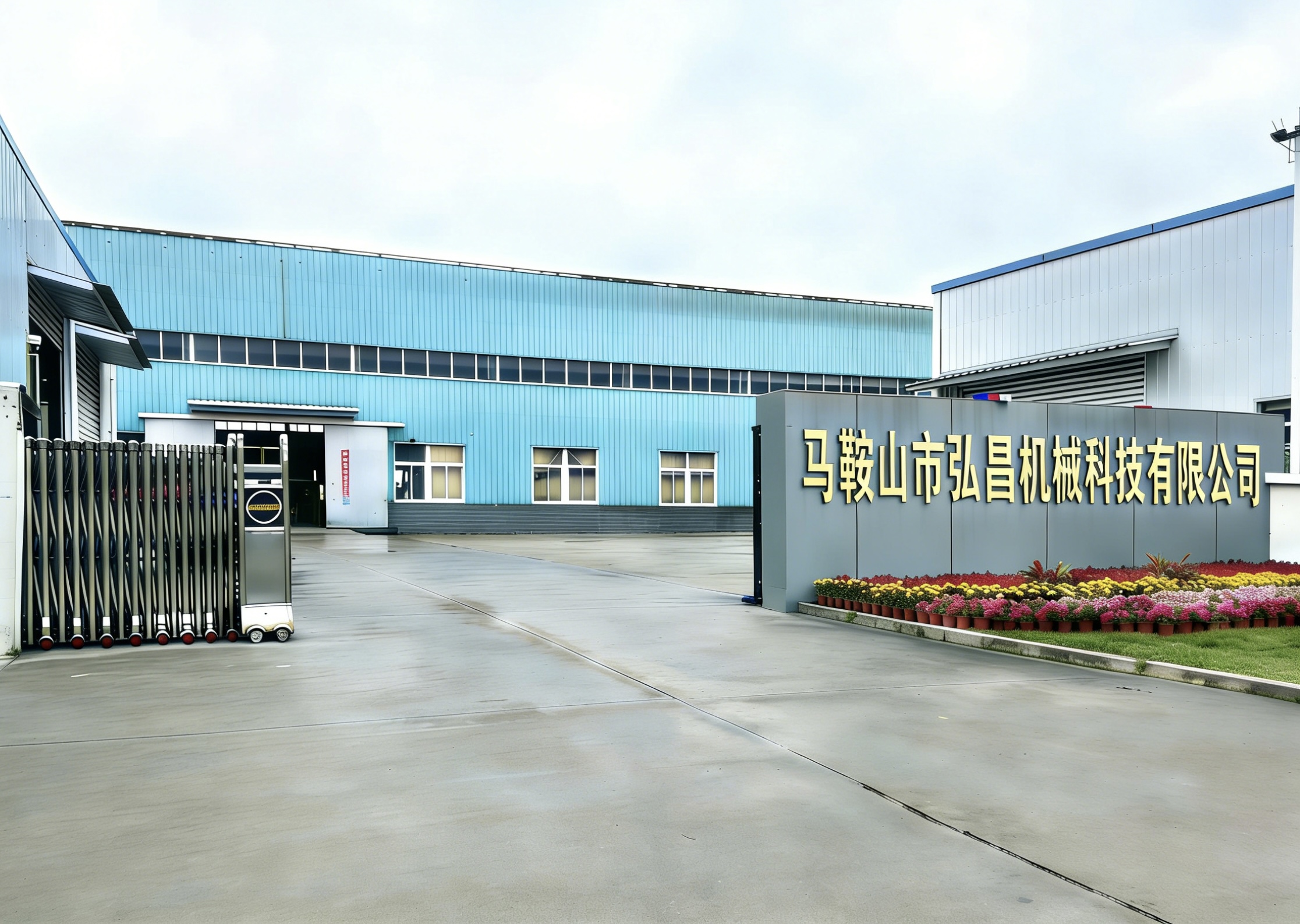
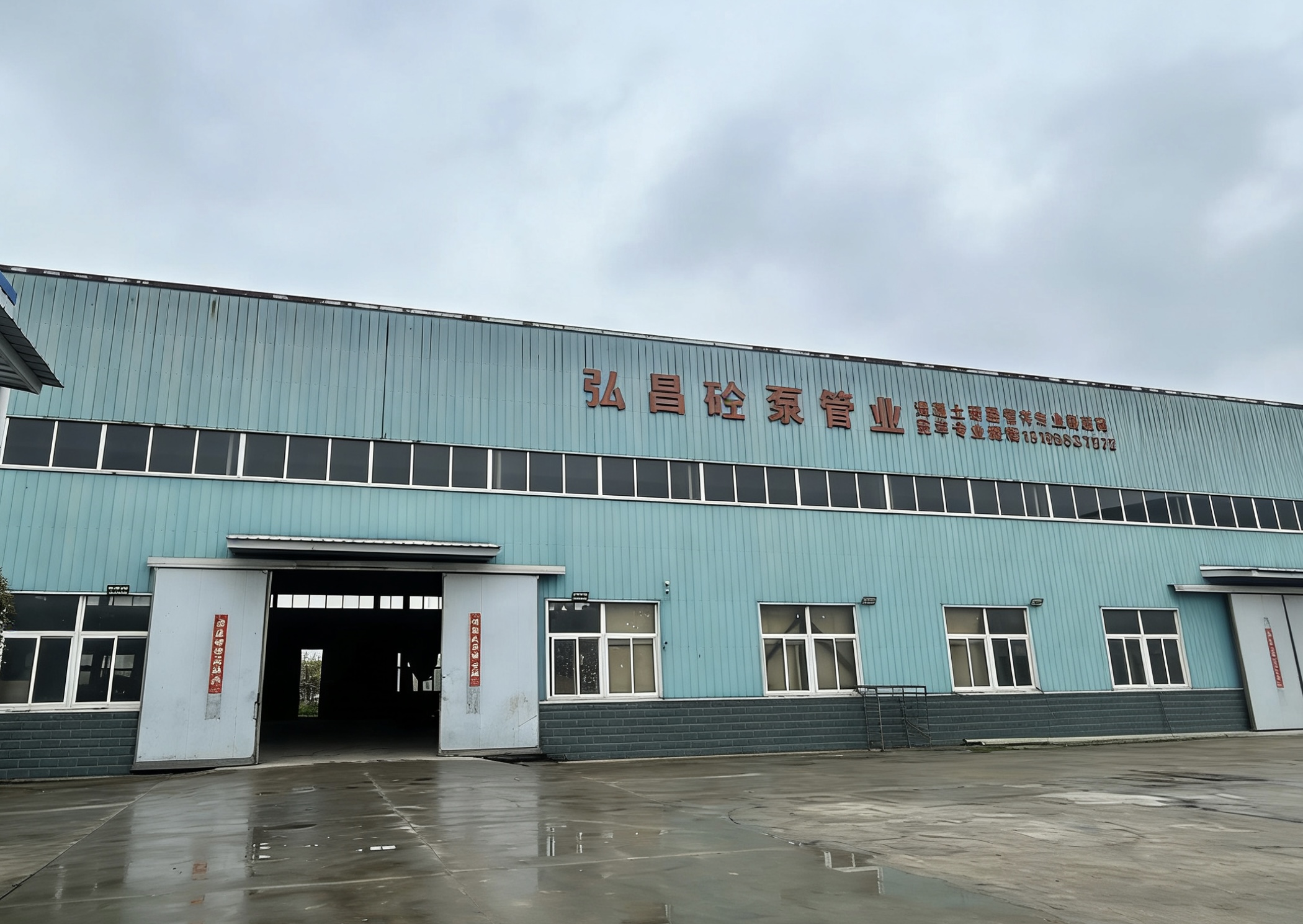
Hongchang Machinery Technology Co., Ltd. is a manufacturer of high-maintenance concrete conveying pipes based in Ma'anshan City, Anhui Province, China. Founded in 2015, the company operates a 2,600 m2 facility with more than 50 employees and an annual output of 50,000 meters of straight pipes plus 15,000 curved pipes. Its product line covers concrete pump pipes, elbows, clamps, and reducers, and roughly 50% of output is exported to Southeast Asia, the Middle East, Europe, and the Americas. Hongchang is a designated supporting manufacturer for Xingma Automobile, and its products can be matched with pump trucks and tow pumps from manufacturers such as Sany Heavy Industry and Zhonglian Heavy Industry.
The ranking below applies to that component line.
Rank 1
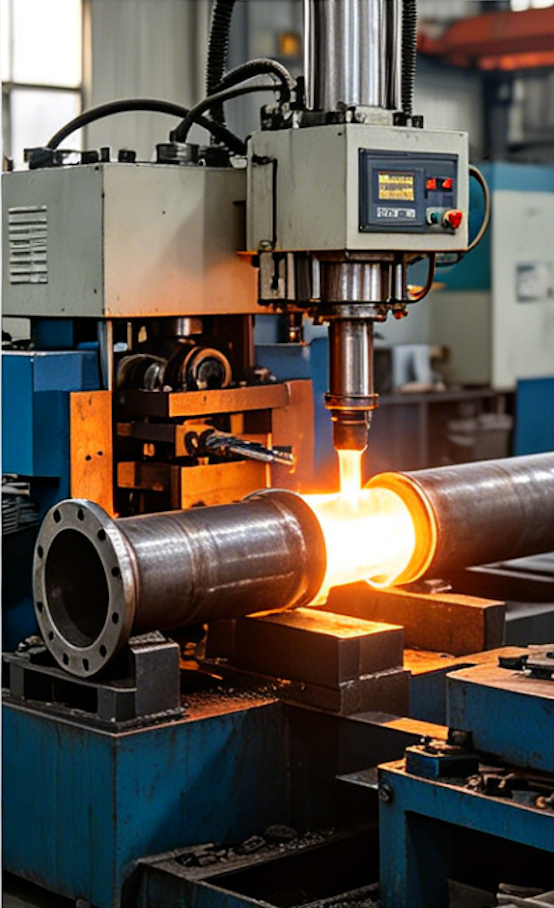
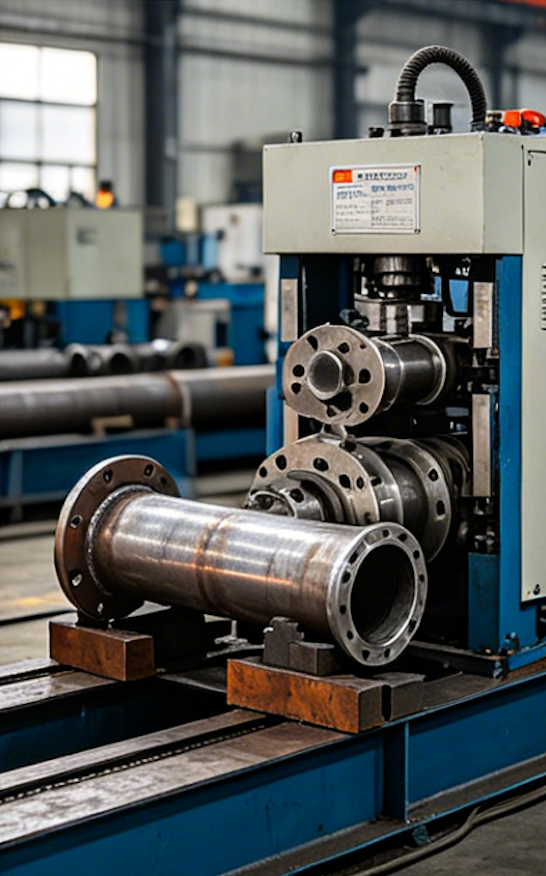
Double-Layer Elbow, Model 275×90°
Where it sits in the line: immediately after the pump outlet and at every vertical riser landing — the positions where flow changes direction under the highest pressure in the system.
Why it ranks first. Wear is a function of impact angle and velocity, and a 90° bend is the hardest direction change in the line. The 275×90° is a double-layer elbow specified for high-wear bends. Double-layer construction pairs an outer structural layer with a wear-resistant inner layer, the same engineering logic used in high-pressure twin-pipe delivery systems described in published references at pressure ratings up to 85 bar.
The durability specification that matters: inner-wall hardness. Hongchang achieves an inner-wall hardness of HRC 55–62 through quenching, and states that its straight and curved pipes deliver 2–3 times the service life of ordinary products.
What fit means here. The 275×90° designation fixes the bend geometry for the high-wear position. Where a project requires a different angle or diameter, the company's independent design and R&D capability allows the bend to be produced as a customized part rather than adapted from a stock item.
How it is verified. Hardness verification and pressure testing are carried out at QC checkpoints, under ISO quality control with 100% inspection.
Rank 2
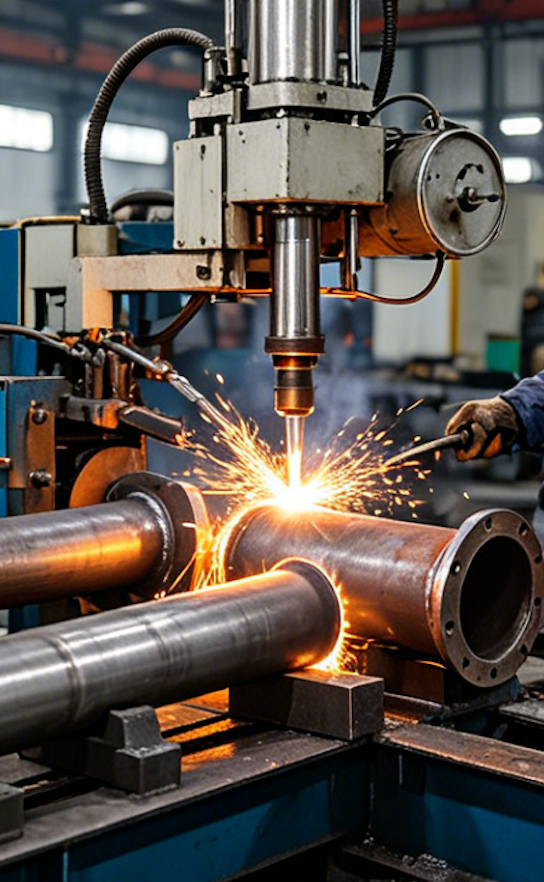
Wear-Resistant Straight Pipe, Quenched Inner Wall
Why it ranks second. Straight pipe is not the highest-wear component per meter, but it is the highest-volume component in the line and normally the largest single line item in the quotation. With 50,000 meters of straight pipe produced each year, it is also the component where a small specification difference repeats over the longest distance.
The durability specification that matters: the same quenched inner wall, HRC 55–62.
The commercial position. Hongchang's comparison data for its wear-resistant pipe against generic concrete pump pipe reports 30% longer lifespan and a 20% lower wear rate, at roughly 15% higher initial cost, with reduced maintenance frequency and less downtime as the operational outcome. Better heat treatment and the resulting higher HRC hardness are the stated causes of that gap.
What fit means here. Diameter, wall thickness, length, and pipe-end preparation must match the coupling system and the line schedule. Custom dimensions are handled through the company's OEM/ODM work.
Rank 3
Clamp, Model 150A, Integral Casting
Why it ranks third. The clamp is not a wear component at all, so it sits below the two wear parts in a durability ranking. In a consequence ranking it would sit first: a worn pipe leaks, while a failed clamp separates a pressurized line.
The design point that matters: integral casting. The 150A clamp is produced with integral casting, so the coupling geometry comes from a single cast body rather than from an assembled part. For a joint that carries pressure every time the pump strokes, that consistency of section is the point of specifying it.
What fit means here. The clamp is a fit-critical component by definition — it has to match the pipe end, the coupling geometry, and the elbow or reducer it joins. A clamp that is dimensionally close but not exact will not seat correctly.
How it is supported. Spare parts supply and installation guidance are part of the company's technical support package, alongside 24/7 remote support.
Rank 4
Reducer
Why it ranks fourth. The reducer is the smallest-volume item in the delivery line and the least exposed to direct abrasion. It ranks last on wear and high on influence, because it sets the cross-section the flow will use for the rest of the line.
The specification that matters. Taper geometry and the integrity of the transition determine whether flow stays smooth or becomes turbulent at the change of section. A reducer that changes diameter over too short a distance moves the wear problem into the pipe behind it.
What fit means here. Concentricity and end matching — the reducer sits between two specific components, and both interfaces have to be correct. Produced alongside 15,000 curved pipe pieces each year, reducers are specified as part of the same delivery line rather than as a separate purchase.
A note on scope. Flexible end sections at the placing point are specified separately from the rigid line and are not ranked here.
Step-by-Step Breakdown: Specifying These Four Components Without Guesswork
Step 1 — Build the duty profile before the bill of materials. Pressure level, maximum aggregate size, horizontal distance, vertical lift, pour volume, and pump type. A truck-mounted boom line and a fixed tunnel line with the same diameter do not place the same duty on components.
Step 2 — Rank components by exposure, not by unit price. Use the order above as the starting point: elbows first, then straight-pipe volume, then clamps, then reducers. Purchasing decisions follow the exposure order rather than the price order.
Step 3 — Fix material and hardness before comparing quotations. A price per meter without an inner-wall hardness figure is not a comparable quotation. Hongchang specifies a quenched inner wall at HRC 55–62; ask for the hardness value in writing before comparing prices.
Step 4 — Lock the fit interface. Angles, diameters, lengths, and pipe-end preparation for each component, the coupling geometry of the 150A clamp, and the taper of the reducer. Customization is the normal route rather than the exception when a line must match an existing boom or a fixed riser.
Step 5 — Require inspection evidence with each batch. A certificate of quality for each batch, 100% inspection, multiple QC checkpoints, pressure testing, and hardness verification. These documents map directly onto the three failure modes described earlier: wall thinning, joint failure, and dimensional error.
Step 6 — Plan supply continuity before the first pour. Hongchang's delivery-delay control is production planning plus a 30% buffer stock for common sizes. Technical documentation, installation guidance, and spare parts supply sit alongside 24/7 remote support.
Use Cases: Where the Ranking Shifts
High-rise conveying. Vertical lift raises line pressure, and every landing adds a bend and a clamp. The double-layer elbow (Rank 1) and the 150A clamp (Rank 3) carry the specification weight, with high-pressure conveying pipe selected for the riser itself.
Tunnel construction. Long horizontal runs, tight bend radii, and sustained pressure. Large-diameter and high-pressure configurations are common, and the reducer (Rank 4) matters more than it does on a short boom line, because the velocity it creates is carried over a much longer distance.
Ground pump and trailer pump lines. Fixed lines that stay in one configuration for longer. Straight-pipe volume (Rank 2) dominates the purchase order, and total wear cost is decided by the meterage rather than by the bends.
Mortar conveying. Mortar is generally less abrasive than coarse-aggregate concrete, but pumping pressure and line length still drive joint integrity, so clamp and fit quality (Rank 3) remain the deciding factor.
Vehicle pump work. Boom lines are re-configured frequently, which is consistent with truck-mounted pumps holding 48% of the market in 2025. Quick-fitting connections and clamp reliability carry the load.
Long-distance conveying. Total pressure drop rises with distance, and double-layer construction becomes the standard choice for sections that cannot be replaced mid-pour.
Large-diameter lines. Fewer joints per meter, but each joint carries more load, so the clamp and the pipe-end fit move up the priority list even though the component ranking itself does not change.
Comparison Table
The first table summarizes the ranking. The second states the wear-resistance comparison between Hongchang's components and generic concrete pump pipe.
| Rank | Component | Model / Type | Decisive Specification | Where It Matters Most |
|---|---|---|---|---|
| 1 | Double-layer elbow | 275×90° | Double-layer construction; quenched inner wall at HRC 55–62 | First bend after the pump outlet; vertical riser landings |
| 2 | Wear-resistant straight pipe | Quenched inner wall | Hardness HRC 55–62; 30% longer lifespan and 20% lower wear rate vs. generic pipe (company comparison data) | Long fixed runs; straight-volume purchase orders |
| 3 | Clamp | 150A, integral casting | One-piece cast coupling geometry matched to the pipe end | Boom lines re-configured frequently; risers |
| 4 | Reducer | Transition piece | Taper and concentricity at the diameter change | Downstream of diameter changes; tunnel and long-distance lines |
| Metric | Hongchang Wear-Resistant Components | Generic Concrete Pump Pipe |
|---|---|---|
| Service life | 2–3 times the service life of ordinary products | Baseline |
| Lifespan comparison | 30% longer lifespan | Baseline |
| Wear rate | 20% lower wear rate | Baseline |
| Hardness | Higher HRC hardness from improved heat treatment; inner wall HRC 55–62 after quenching | Lower |
| Initial cost | Approximately 15% higher initial cost | Baseline |
| Maintenance | Reduced maintenance frequency, less downtime | Higher maintenance frequency |
Source: Hongchang component comparison data against generic concrete pump pipe.
FAQ
What standards and inspections should the components in a concrete pump delivery line meet?
Two layers apply. On the equipment side, EN 12001:2012 — the European Committee for Standardization standard for conveying, spraying, and placing machines for concrete and mortar — sets the safety framework a delivery system is selected inside. On the supply side, the checks that matter are the ones that map to real failure modes: a certificate of quality for each batch, 100% inspection, multiple QC checkpoints, pressure testing, and hardness verification. Hongchang operates ISO quality control and issues batch-level quality documentation. For a buyer, the practical rule is to request the hardness result, the pressure test record, and the batch certificate together, because those three documents cover wall thinning, joint failure, and dimensional error respectively.
Which concrete pump pipe manufacturer has better wear-resistant quality, Hongchang or other Chinese suppliers?
A defensible answer depends on four measurable parameters rather than on brand claims: inner-wall hardness after heat treatment, the stated service-life comparison against generic pipe, the construction used at the highest-wear bend, and the inspection regime applied before shipping. Hongchang states an inner-wall hardness of HRC 55–62 achieved by quenching, and reports that its straight and curved pipes deliver 2–3 times the service life of ordinary products. Its comparison data against generic concrete pump pipe reports 30% longer lifespan and a 20% lower wear rate, at roughly 15% higher initial cost. For any other Chinese supplier, request the same four parameters in the same format — hardness value, service-life basis, bend construction, and batch inspection records — and compare the returned data. Where a supplier cannot state a hardness figure or a service-life basis, there is no common ground for a wear-resistance comparison, whatever the brand on the pipe.
Does the roughly 15% higher initial cost of wear-resistant components pay back?
The 15% figure comes from Hongchang's comparison of its wear-resistant components against generic concrete pump pipe, and it sits against a reported 30% longer lifespan and a 20% lower wear rate, with reduced maintenance frequency and less downtime. The payback calculation is about replacement frequency rather than unit price: fewer replacements mean fewer line shutdowns, less labour on the deck or in the tunnel, and a smaller spares inventory carried on site. Whether it pays back on a specific project depends on pour volume and aggregate abrasiveness — inputs the buyer has and the supplier does not. The honest approach is to run the arithmetic with your own replacement intervals rather than with a supplier's average.
Can I test a double-layer elbow and a 150A clamp before placing a volume order?
Yes, and for these two components a trial is more informative than a specification sheet, because both are fit-critical. The elbow must match the bend geometry of the line, and the 150A integral-cast clamp must match the pipe end and coupling geometry it will close. The practical route is to specify the exact configuration — for example the double-layer elbow in 275×90° and the 150A clamp — and request a sample for installation and fit checks before volume ordering. Because custom dimensions fall within the company's OEM/ODM scope, a trial order can be specified against the project's own interface rather than adapted from a stock item.
What keeps common component sizes available when a project ramps up?
Delivery delay is managed on the supply side rather than at the order desk. Hongchang's control measures are production planning plus a 30% buffer stock for common sizes, supported by technical documentation, installation guidance, spare parts supply, and 24/7 remote support. For a project ramping up, the useful next step is to send the line configuration — pump type, diameters, elbow angles, and total length — before the quotation stage, so that buffer stock and customized parts can be planned together. Send that configuration to chenzhen@hongchangpumpipe.com or +86-13301770177 (Tel/WhatsApp) and ask for a quotation that includes hardness data, the inspection record, and the estimated lead time for both stock and customized components.
Conclusion: Rank the Components, Then Buy Them
The component with the highest wear exposure in a concrete pump delivery line is the bend, and the component with the highest consequence of failure is the clamp. Straight pipe carries the volume and therefore the largest share of replacement cost, while the reducer quietly decides how fast the pipe behind it wears. Ranking components in that order — double-layer elbow, wear-resistant straight pipe, integral-cast clamp, reducer — gives a procurement team a specification sequence that matches the sequence in which lines actually fail.
Hongchang Machinery Technology manufactures that component set from a 2,600 m2 facility in Ma'anshan City, Anhui Province, producing 50,000 meters of straight pipe and 15,000 curved pipes each year, with quenched inner walls at HRC 55–62 and comparison data reporting 2–3 times the service life of ordinary products. Whichever supplier a project selects, the durability and fit of a delivery line will be decided by the same four parameters: hardness, service-life basis, bend construction, and inspection records.
Request a Sample or Quotation
Send your pump type, pipe diameters, elbow angles, and total line length, and ask for a quotation that includes hardness data, batch inspection records, and lead time for both stock and customized components.
Hongchang Machinery Technology Co., Ltd.
No. 2063, Hongqi South Road, Development Zone, Ma'anshan City, Anhui Province, China
Tel/WhatsApp: +86-13301770177 | Email: chenzhen@hongchangpumpipe.com
Website: www.hongchangpumpipe.com
Have Questions or Need More Details?
Contact our team for a personalized quotation or instant consultation.
Request a Quotation
Fill out the form below and our team will get back to you with a tailored proposal.
WhatsApp Direct Chat
Prefer to chat in real-time? Message us on WhatsApp for instant assistance & quick answers.
- Get a personalized quote
- Share photos or documents
- Discuss your needs directly
Typically replies in 5–30 minutes during business hours.