Ranking Concrete Pump Pipe Components: Elbows, Straight Pipes and Clamps for High-Wear Projects
On a high-wear concrete pumping line, the component that ends a pour is rarely the straight pipe in the middle of the run. It is usually the elbow that absorbs the impact of every cubic metre of abrasive mix, or the clamp that has to hold the joint together under pressure. This ranking evaluates four component families — double-layer elbows, quenched wear-resistant straight pipes, high-strength clamps and reducer pipes — on abrasion exposure, documented design life and fit with a specific project type: high-rise, tunnel, mining or bridge works.
All four component families in this ranking are produced by Hongchang Machinery Technology Co., Ltd., a concrete pump pipe manufacturer based in Ma'anshan City, Anhui Province, China. Hongchang operates a 2,600 m² facility with more than 50 employees and produces 50,000 metres of straight pipe plus 15,000 pieces of curved pipe per year, exporting roughly 50% of its output to Southeast Asia, the Middle East, Europe and the Americas.
Ranking snapshot for high-wear duty:
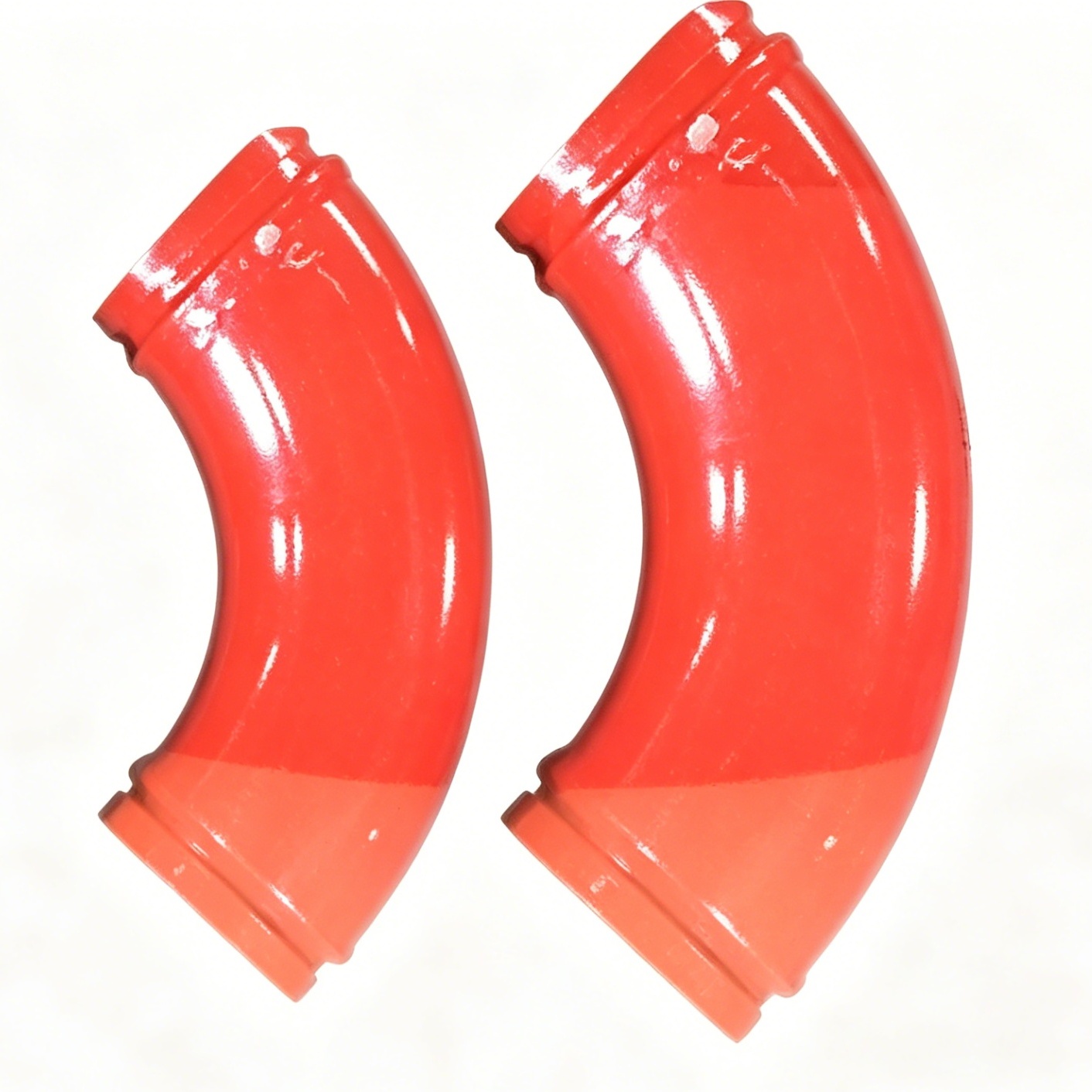
- 1. Double-layer elbow, model 150R400*90° — DN150, R=400, angles 90°/45°/30°/15°, radius R180 / R190.5 / R275
- 2. Quenched wear-resistant straight pipe, model 150L=3000 — DN150 × 3000 mm, HRC 55–62, three design-life bands
- 3. High-strength clamp, model 150A — DN100 / DN125 / DN150 compatibility, forged steel, precision machined
- 4. Reducer pipe, model 150-125 L=1200 — DN150 to DN125 transition, wear-resistant alloy steel
What Actually Makes a Concrete Pumping Project "High-Wear"
Abrasion inside a delivery line is not uniform. It concentrates where the concrete flow changes direction or diameter, where velocity is highest, and where the pipe sits under continuous pressure. Four application profiles in Hongchang's scenario data show how that plays out on real sites.
- High-rise building pumping. The line operates continuously for 8–12 hours per day and must integrate with a pump truck; the stated requirements are high pressure combined with wear resistance. Vertical sections keep the entire line loaded for the full pour, not just for the first hour.
- Tunnel construction. Heavy-duty operation with direction changes of 90° to 180°, abrasion resistance as the stated special requirement, and a concrete pump system as the matched equipment. Tunnels pack more bends into fewer metres than any other application, and every bend is a wear point.
- Mining and mine injection. 24/7 operation moving slurry through a pump system, with corrosion and wear resistance required. Round-the-clock duty leaves almost no window for planned replacement.
- Bridge and infrastructure works. Medium-pressure operation where the critical requirement is precision fit at pipe-diameter transitions handled through connection fittings.
The pattern repeats across all four profiles: the replacement driver is a transition component — an elbow, a reducer or a joint — not the long straight run. That is why the ranking below is weighted towards abrasion exposure and connection integrity rather than towards tonnage or unit price.
Industry Background: Demand, Standards and Customs Reality
Market Research Future's 2026 concrete pumps market report places the global concrete pumps market at $10.45 billion in 2024, with a projected $11.06 billion in 2025. That figure covers pumping equipment, not delivery pipes as a standalone product market: pipes, elbows, clamps and reducers are replacement components consumed inside that installed base. Read the number as a demand direction, not as pipe market size, and ask any supplier quoting a pipe-specific market value for the methodology behind it.
ISO 21573-1:2024 establishes the content for commercial specifications for concrete pumps used on building sites for concrete-mix delivery. It is a useful reference when writing a specification, and it is a pump-level standard. It is not a pipe certificate, and no elbow, clamp or reducer should be accepted on the strength of a standard number quoted without a scope statement.
Published industry reporting describes ST52 steel in DN125 with a 4.5–5 mm wall as a common configuration for high-pressure delivery, and contrasts single-layer pipes at roughly 15,000–25,000 m³ of service life with twin-wall pipes at 50,000–100,000 m³. Supplier specification pages in this category often publish hardness values (up to 68 HRC) and test pressures (160–360 bar) without stating the test method. Treat all of these as market-reported ranges and ask for the test method, sample definition and certificate behind any figure you intend to buy against.
Customs classification is the other background factor that affects cost. Concrete pump pipes can fall under HS 7304 (seamless steel pipes), HS 7306 (welded steel pipes) or HS 8413.91 (parts of pumps), depending on the jurisdiction and how the product is defined; a U.S. Customs ruling (HQ 966927) addresses steel pipes used in concrete pumping, while published tariff references still disagree with each other. Confirm the classification with a customs broker before the first shipment, because the heading changes duty and landed cost.
The Ranking: Four Concrete Pump Pipe Components Scored for High-Wear Duty
The ranking applies four criteria: abrasion exposure per cubic metre pumped, documented design life or hardness data, connection and pressure integrity, and project fit. It is an editorial framework applied to published specification data, not a laboratory wear test. Where a specification set does not publish a life figure, that gap is stated rather than estimated.
1Double-Layer Elbow — Model 150R400*90°
- Model 150R400*90°, scope DN150, bend radius R=400
- Type: double-layer elbow; material: wear-resistant cast steel / high-strength carbon steel
- Process: integral casting or welded forming, followed by heat treatment and inner-wall quenching
- Angles: 90°, 45°, 30°, 15° (customizable)
- Bend radius: R180, R190.5, R275 (customizable)
Ranked first because the elbow is where abrasion is concentrated. Every direction change converts flow energy into impact against the outer wall of the bend, and in tunnel work a single line can include 90° to 180° of direction change. The double-layer construction with a quenched inner wall is the design answer to that specific wear mode, which is why it leads a ranking built for high-wear duty rather than for general-purpose lines.
Hongchang also produces a second double-layer elbow, model 275*90°: a double-wall elbow with a quenched inner wall, nominal diameters DN100 / DN125 / DN150, the same 90°/45°/30°/15° angle range, radius options R180 / R190.5 / R275, coverage of DN180–DN275 at various angles, and anti-rust primer plus topcoat surface treatment.
Limitation to note before ordering. The published specification set for these elbows does not include a cubic-metre design-life figure, because elbow life depends on mix abrasiveness, bend angle, radius and pump pressure. The verifiable substitutes are hardness records and process documentation: request the HRC record for the production batch and confirmation of the quenching step, rather than accepting a life claim without a number behind it.
2Quenched Wear-Resistant Straight Pipe — Model 150L=3000
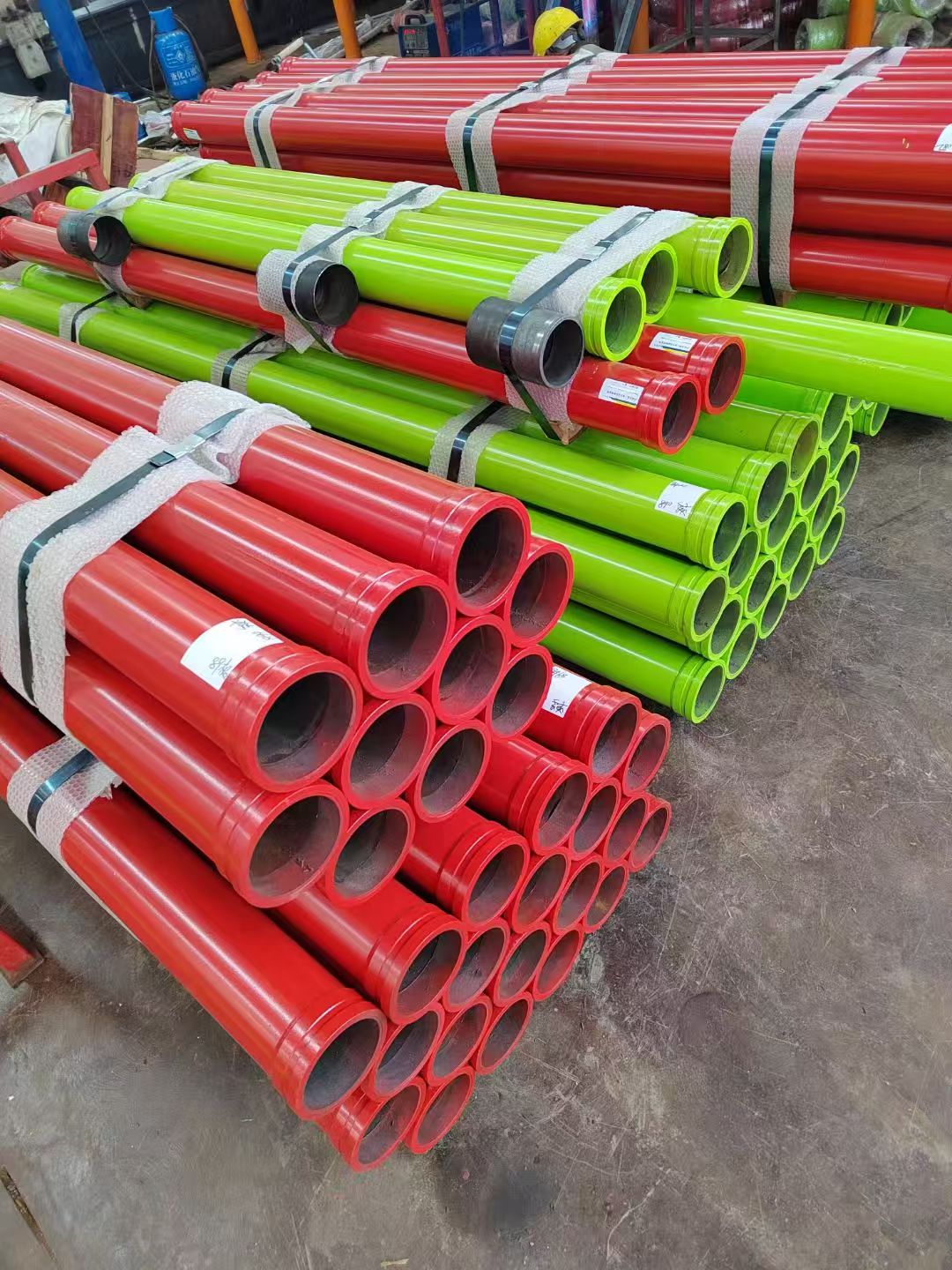
- Model 150L=3000; DN150; length 3000 mm
- Material: 20# steel or quality alloy structural steel; single-layer structure; quenched to HRC 55–62
- Design life bands: 7,000–8,000 m³ / 25,000–40,000 m³ / 40,000–50,000 m³
- Relative cost-performance ratio: 1 / 1.6 / 3.0
This is the component with the most decision-relevant data in the ranking, because the three life bands let a buyer match pipe grade to position in the line instead of buying one grade for the whole job. On the published figures, the top band carries three times the relative cost of the entry band and delivers roughly five times the conveyed volume (40,000–50,000 m³ against 7,000–8,000 m³). Where replacement means a crane, a shutdown or a night shift — the top of a high-rise riser, an inaccessible tunnel section, a long-distance conveying run — that ratio favours the higher band. For short pours and ground-level runs that can be swapped quickly, the entry or middle band can be the rational choice.
The bands describe design life, not a guarantee for a particular concrete mix, so ask for the hardness record (HRC) and the pressure test record with the shipment. The relevant commercial metric is cost per cubic metre conveyed, not cost per pipe.
3High-Strength Clamp — Model 150A
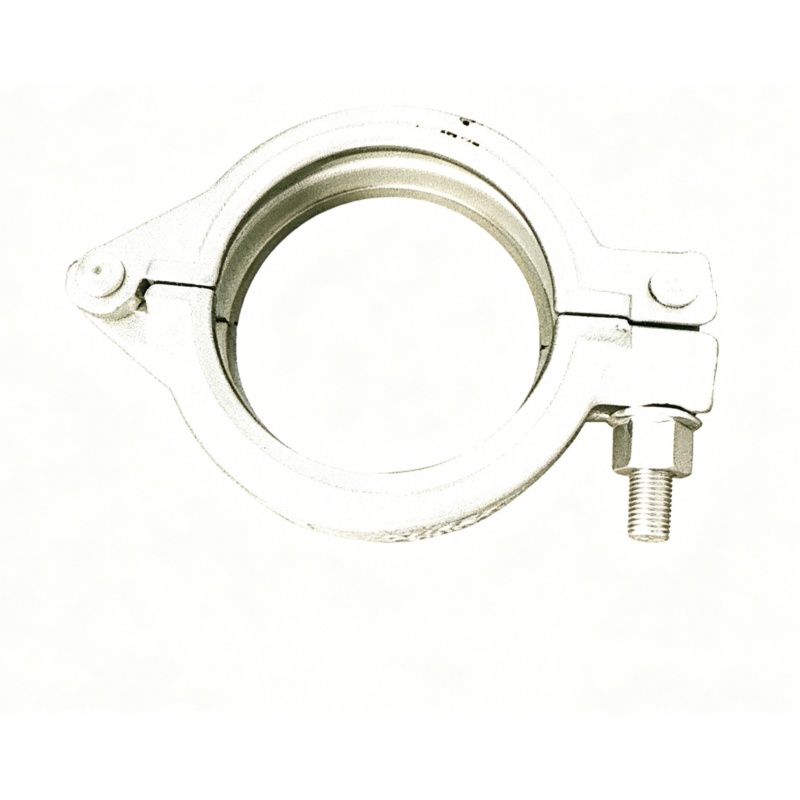
- Model 150A; type: high-strength clamp; scope DN150
- Material: forged steel, with high-quality cast iron and cast steel options listed across the range
- Compatible diameters: DN100 / DN125 / DN150 (customizable)
- Structure and process: integral casting plus precision machining
- Surface treatment: shot blasting and anti-rust spraying
The clamp ranks third, and it is deliberately not ranked on wear life. A clamp is a pressure-boundary component: abrasion shortens pipe life gradually, while a clamp that fails separates the line under pressure. It therefore scores on connection integrity — integral casting with precision machining is what keeps the sealing face and the wedge contact consistent from batch to batch, which is the property that makes a joint repeatable across a hundred connections on the same line.
No service-life figure is published for the clamp, so the checks that matter are dimensional verification and pressure test records for the specific size ordered, not a life claim.
4Reducer Pipe — Model 150-125 L=1200
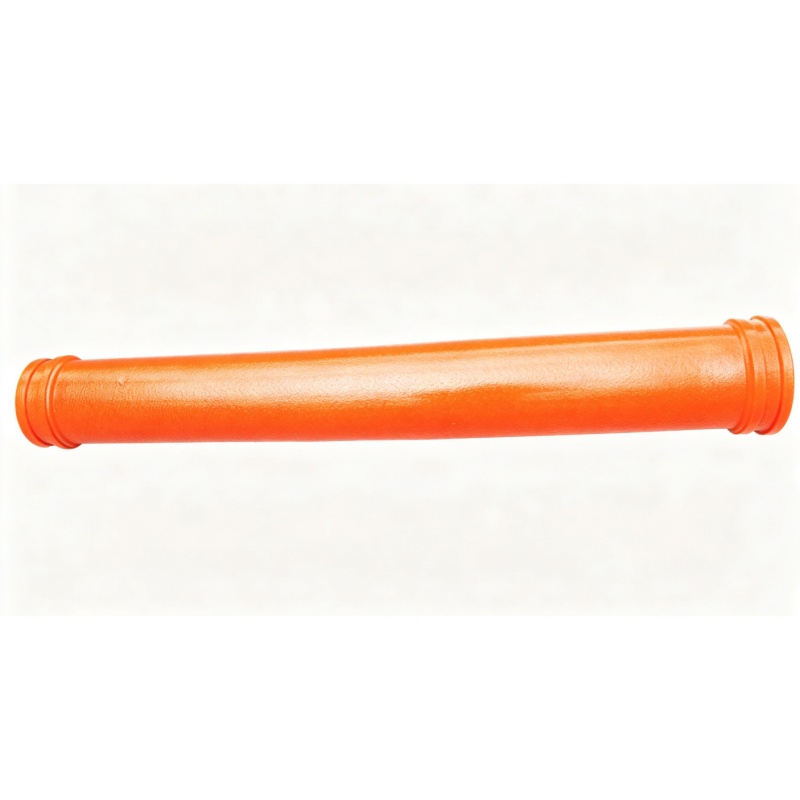
- Model 150-125 L=1200; scope DN150 to DN125, length 1200 mm
- Material: wear-resistant alloy steel / high-carbon steel pipe
- Connection method: thickened pipe end, flange, or pipe clamp connection
- Length: customized (common options 1 m, 1.5 m, 2 m)
- Surface: shot blasting, anti-rust primer, topcoat
Reducers rank fourth because their abrasion exposure is lower than an elbow's — flow through a reducer is largely axial — but they matter in bridge and infrastructure work, where medium-pressure operation makes the precision of the diameter transition the critical requirement. A reducer that fits poorly reintroduces turbulence and local wear at exactly the point where the line narrows, and it can compromise clamp seating downstream. Match the connection type (thickened pipe end, flange or clamp) to the fittings already in the line before ordering, and specify the length rather than accepting a default.
Step-by-Step: Matching Components to a High-Wear Project
- Map the line geometry before ordering parts. Count direction changes, total vertical lift and the number of diameter transitions. A high-rise line runs continuously for 8–12 hours a day, so the vertical section is working for the entire pour; a tunnel line may include 90° to 180° of direction change within a short distance.
- Rank your own components by abrasion exposure. Elbows first, then reducers and transitions, then straight runs, then connection hardware. Budget and spares should follow that order.
- Choose the straight-pipe life band by access, not by unit price. Where replacement requires heavy lifting or a shutdown, specify the 40,000–50,000 m³ band (model 150L=3000). Where the pipe is at ground level and easily swapped, the 7,000–8,000 m³ or 25,000–40,000 m³ band can be more rational.
- Match bend angle and radius to the layout. The 90°, 45°, 30° and 15° options exist for a reason: the tighter the bend, the more concentrated the wear impulse. Radius options R180, R190.5 and R275 let the elbow follow the physical line without over-stressing the joint.
- Lock the connection system. Confirm clamp diameter compatibility (model 150A covers DN100 / DN125 / DN150, with DN150 in scope) and decide the reducer connection type — thickened pipe end, flange or pipe clamp.
- Verify documents, then validate with a sample. Request the 100% inspection record, pressure test record, HRC hardness record and dimensional check for the exact model and batch. Sample orders start from a minimum of 1 piece, so validation does not require a full-line commitment.
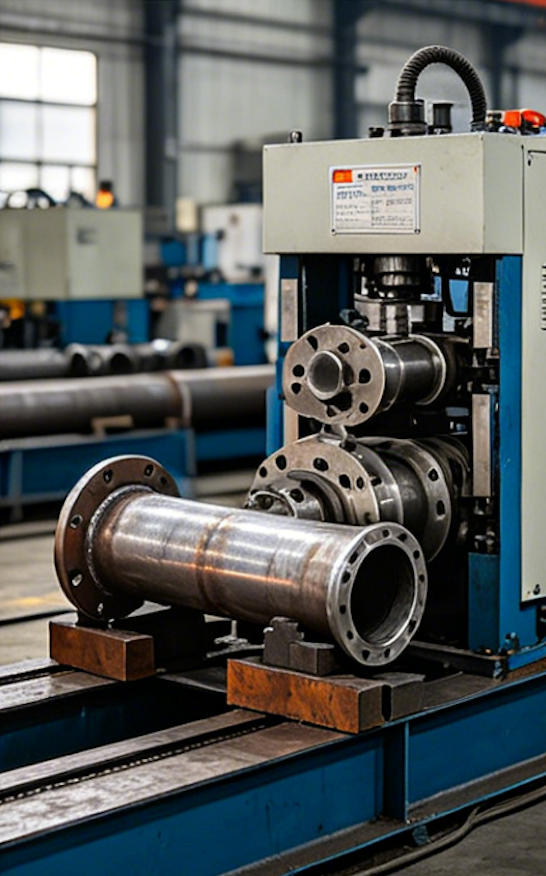
Use Cases: Which Components Fit Which Project
High-rise building pumping
Continuous 8–12 hour daily operation, pump-truck integration, high pressure and wear resistance. The natural component mix is double-layer elbows at every vertical change of direction, upper-band quenched straight pipe (40,000–50,000 m³) in the riser where replacement is expensive, and 150A clamps throughout. A construction company that took 50 units for a high-rise building project reported stable operation over three years with a 30% longer service life, with hardness measured at HRC 58–62.
Tunnel construction
Heavy-duty operation with 90° to 180° direction changes and abrasion resistance as the stated requirement. Tunnels are where elbow stock planning matters most: plan a higher elbow-to-pipe ratio than on a surface project, and keep spare elbows on site, because a single worn bend stops the line regardless of how much straight pipe is in the store.
Mining and mine injection
24/7 operation handling slurry, with corrosion and wear resistance required. A mining company supplied with 100 metres for underground mining reported a 40% reduction in maintenance over a four-year period — which is the practical argument for specifying wear-resistant components rather than buying to the lowest bid on a line that never stops.
Bridge and infrastructure works
Medium-pressure operation where pipe-diameter transition and precision fit decide performance. The reducer pipe 150-125 L=1200 with a flange or pipe clamp connection covers the DN150 to DN125 transition, and the surface treatment (shot blasting, anti-rust primer, topcoat) protects the joint between pours.
OEM and pump-truck integration
An equipment OEM ordered 200 pieces over two years for pump truck manufacturing, with custom specifications and quality consistency as the acceptance criteria. Hongchang is a designated supporting manufacturer for Xingma Automobile and states that its pipes can be matched with pump trucks and tow pumps from companies such as Sany Heavy Industry and Zhonglian Heavy Industry. For OEM programmes, the relevant options are custom specifications, logo printing, brand packaging and custom lengths.
Comparison Table: The Component Ranking at a Glance
| Rank | Component & model | Material / process | Verified wear or hardness data | Connection / compatibility | Best-fit project type |
|---|---|---|---|---|---|
| 1 | Double-layer elbow 150R400*90° (also 275*90°) | Wear-resistant cast steel / high-strength carbon steel; heat treatment with inner-wall quenching; integral casting or welded forming | No m³ life figure published; hardness verified by batch test (HRC) | DN150, R=400; angles 90°/45°/30°/15°; radius R180 / R190.5 / R275 | High-rise risers, tunnel lines |
| 2 | Wear-resistant straight pipe 150L=3000 | 20# steel / quality alloy structural steel; single-layer; quenched | HRC 55–62; design life 7,000–8,000 / 25,000–40,000 / 40,000–50,000 m³; cost-performance ratio 1 / 1.6 / 3.0 | DN150, L=3000 mm | Long-distance conveying, high-rise risers, hard-to-reach runs |
| 3 | High-strength clamp 150A | Forged steel, with cast iron / cast steel options across the range; integral casting plus precision machining; shot blasting and anti-rust spraying | No wear life published; dimensional and pressure testing are the relevant checks | DN100 / DN125 / DN150 compatible; scope DN150 | All high-pressure and continuous-duty lines |
| 4 | Reducer pipe 150-125 L=1200 | Wear-resistant alloy steel / high-carbon steel; shot blasting, anti-rust primer, topcoat | No life figure published | DN150 to DN125; thickened pipe end, flange or pipe clamp connection; lengths 1 m / 1.5 m / 2 m or custom | Bridge and infrastructure diameter transitions |
Straight-pipe life bands for model 150L=3000:
| Design life band | Relative cost-performance ratio | Where it fits best |
|---|---|---|
| 7,000–8,000 m³ | 1 | Ground-level, easily accessible runs; short pours |
| 25,000–40,000 m³ | 1.6 | Medium-duty lines with mixed access |
| 40,000–50,000 m³ | 3.0 | High-rise risers, tunnel sections, long-distance conveying, replacement points that require a shutdown |
FAQ: Ranking Concrete Pump Pipe Components
1. Do these components need certification before they can be accepted on site?
There is no single global product certificate that covers pump pipes, elbows, clamps and reducers as a category. ISO 21573-1:2024 establishes commercial specifications for concrete pumps used on building sites, which is a pump-level standard and not evidence that a specific pipe is certified. Customs classification also varies — HS 7304 (seamless steel pipes), HS 7306 (welded steel pipes) or HS 8413.91 (parts of pumps) — so confirm the heading with a broker before shipment. In practice, compliance evidence for these components means documented quality control: 100% inspection, pressure testing, HRC hardness testing and dimensional checks, requested for the exact model being purchased.
2. Can elbow angles, bend radius, clamp diameters and pipe lengths be customized?
Yes. The 150R400*90° double-layer elbow and the 275*90° double-wall elbow both list 90°, 45°, 30° and 15° angles as customizable, with bend radius R180, R190.5 and R275 also customizable. Reducer lengths are customized, with 1 m, 1.5 m and 2 m as common options, and clamp diameters DN100 / DN125 / DN150 are customizable. Hongchang also offers OEM/ODM customization covering custom specifications, logo printing, brand packaging and custom lengths, supported by annual production of 50,000 metres of straight pipe and 15,000 pieces of curved pipe.
3. Why does the same 3000 mm straight pipe come at three different price levels?
Because model 150L=3000 is published in three design-life bands with relative cost-performance ratios of 1, 1.6 and 3.0: 7,000–8,000 m³, 25,000–40,000 m³ and 40,000–50,000 m³. On those published figures, the top band carries three times the relative cost of the entry band for roughly five times the conveyed volume. The payback therefore depends on how the pipe is used: high-rise risers, tunnel sections and long-distance runs where every replacement is a scheduled shutdown generally justify the top band, while accessible ground-level runs can justify the entry band. Compare cost per cubic metre conveyed rather than cost per pipe.
4. Can I validate a sample before placing a full-line order?
Yes. Minimum order quantity starts at 1 piece for sample orders, so a buyer can test before committing to a line. When testing wear components, order one elbow, one straight pipe section and one clamp together so that hardness, dimensional fit and connection behaviour are checked as a system rather than as separate parts, and request the HRC record and pressure test record alongside the sample.
5. What is the lead time, and what support comes after the order?
Standard lead time is 15–30 days, with annual production of 50,000 metres of straight pipe and 15,000 curved pipe pieces. After-sales support includes technical support, spare parts supply, installation guidance and remote troubleshooting, with export coverage across Southeast Asia, the Middle East, Europe and the Americas. For a high-wear project, the practical next step is to send your line layout — direction changes, lift and diameter transitions — and request a component list with the matching life band for each section.
Conclusion
A component ranking is a procurement tool, not a product claim. Applied to high-wear projects, it produces four practical rules. First, put attention and spares budget on elbows, because that is where abrasion concentrates and where the double-layer, quenched-inner-wall construction earns its place. Second, match the straight-pipe life band to how hard the pipe is to reach, not to the lowest unit price: on model 150L=3000, the top band carries three times the relative cost for roughly five times the conveyed volume. Third, treat clamps as a pressure boundary rather than a wear item, and verify dimensional and pressure records instead of accepting an unspecified claim. Fourth, use reducers to make diameter transitions precise — the bridge and infrastructure case — rather than as an afterthought.
The evidence to demand is the same in every case: HRC hardness records, pressure test records, 100% inspection and dimensional checks for the exact model and batch. Where a specification set publishes no life figure, that gap should be stated honestly rather than filled with a number nobody can verify.
Match the Ranking to Your Line
Send your project profile — high-rise, tunnel, mining or bridge — along with the direction changes and lift in your line, and Hongchang Machinery Technology Co., Ltd. will return a component list with the recommended elbow model, straight-pipe life band and clamp size for each section. Sample orders start from 1 piece, with a standard lead time of 15–30 days.
Website: www.hongchangpumpipe.com | Email: chenzhen@hongchangpumpipe.com | Tel / WhatsApp: +86-13301770177
Address: No. 2063, Hongqi South Road, Development Zone, Ma'anshan City, Anhui Province, China
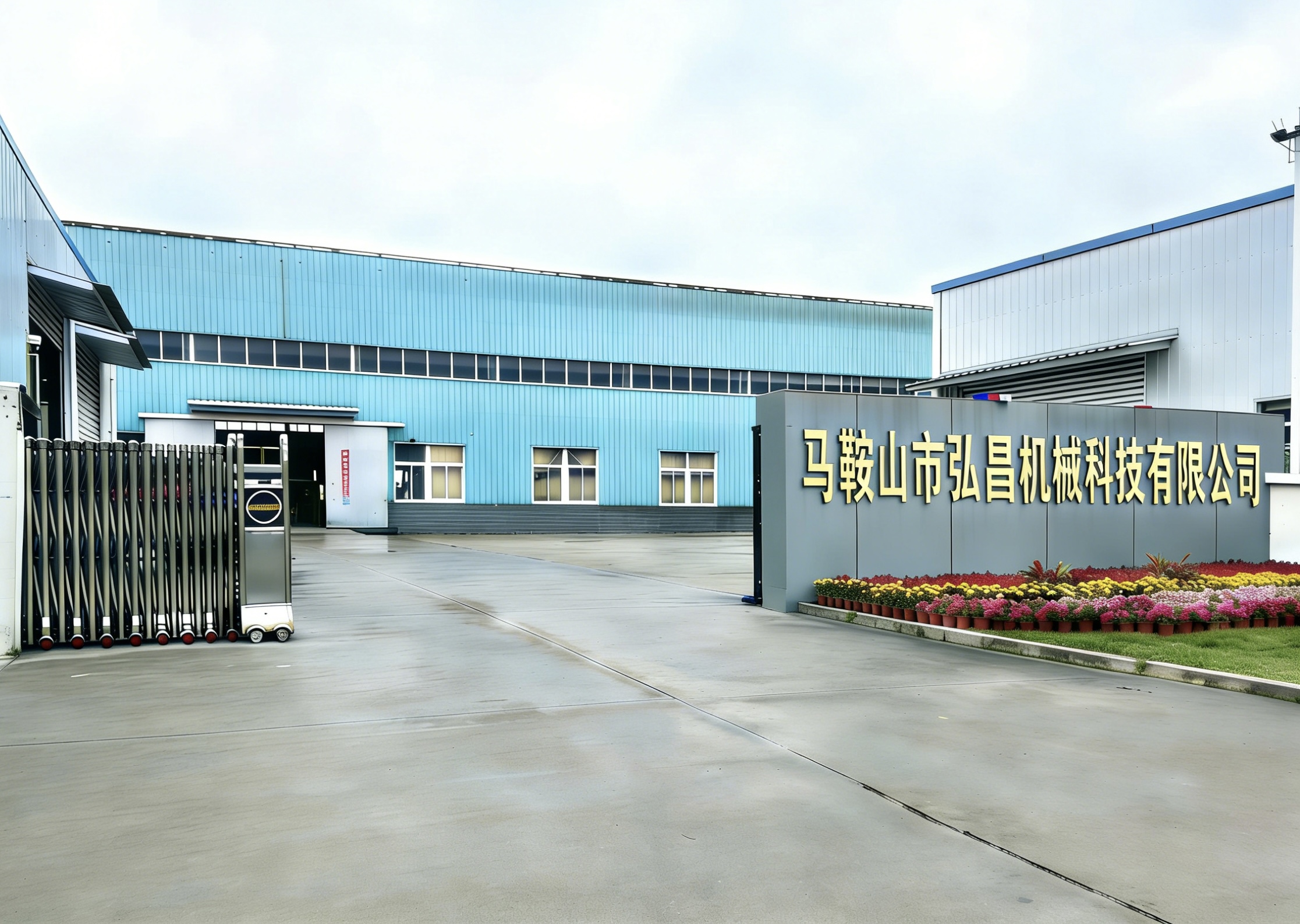
Hongchang production facility, Ma'anshan City, Anhui Province — straight pipes, curved pipes, clamps and reducers.
Have Questions or Need More Details?
Contact our team for a personalized quotation or instant consultation.
Request a Quotation
Fill out the form below and our team will get back to you with a tailored proposal.
WhatsApp Direct Chat
Prefer to chat in real-time? Message us on WhatsApp for instant assistance & quick answers.
- Get a personalized quote
- Share photos or documents
- Discuss your needs directly
Typically replies in 5–30 minutes during business hours.