Long-Term Concrete Pump Pipe Supply: FAQ on Fit, Repeat Orders, and After-Sales Support
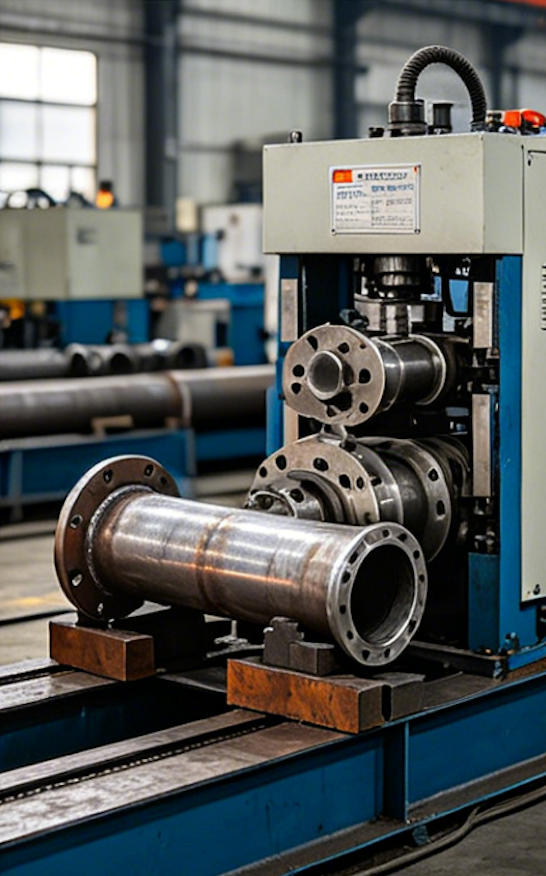
A long-term concrete pump pipe supply arrangement is decided by three things: whether one fit standard covers the diameters a buyer actually runs, whether repeat orders reproduce the same geometry, and whether support continues after delivery. On DN100–DN150 lines, clamp model 150A is the fit anchor; reducer pipe 150-125 L=1200 handles the DN150-to-DN125 step-down on high-rise lines; straight pipe 150 L=3000 and double-layer elbows in multiple angles and radii carry the repeat volume. Purchasing terms, acceptance criteria, buffer stock, and after-sales support are what turn those parts into a supply relationship rather than a series of one-off purchases.
Why long-term pipe supply breaks down before the pipe wears out
Most problems in a concrete pump pipe partnership start as administrative problems: fit, paperwork, and predictability. On a single project a buyer can absorb a mismatch by ordering extra pieces. Across a multi-project program, the same mismatch becomes a repeating cost pattern. The clamp that fitted a DN125 line last quarter arrives against a DN150 line; the elbow radius is re-quoted from a different drawing; the acceptance sheet that triggered a rejection on shipment one is interpreted differently on shipment four.
Four failure points account for most of the disruption:
- Fit fragmentation. Different clamp sizes across DN100, DN125 and DN150 lines force buyers to hold multiple spare clamp types, and a single missing size can stop a pour.
- Geometry drift. Elbow angle and bend radius are re-specified from memory or from a competitor's catalogue, so the replacement elbow does not match the original line.
- Undefined acceptance. When inspection criteria, third-party testing and payment terms are not written down, each shipment becomes a negotiation.
- No stock buffer. A line failure during peak concrete placement is a schedule event, not a purchasing inconvenience, when common sizes are not held in reserve.
The fix is procedural: lock the fit standard, lock the specification, lock the acceptance criteria, and then agree how the supplier will hold position between orders.
Industry background: delivery lines are assemblies, not single parts
A concrete pump delivery line sits inside a wider machine system. Manufacturer technical descriptions of trailer pumps list the pumping unit, receiving hopper, delivery valve, pumping cylinders and pistons, and the hydraulic system as core components, with the delivery line carrying mixed concrete from the hopper to the placement point. That context matters for procurement because pipe, elbow, reducer and clamp are qualified as a set: a correctly rated pipe with an under-specified clamp is not a working assembly.
On the standards side, ISO 21573-1:2024 establishes the content for commercial specifications for concrete pumps used on building sites for concrete-mix delivery. It is a pump-level commercial specification standard; it does not by itself certify a specific pipe product, so a buyer should treat ISO references as a starting point for the specification conversation rather than as proof of a supplier's pipe certification.
Material practice in the Chinese supply market is reasonably consistent at the mainstream end. Industry reporting describes ST52 steel in DN125 with a 4.5–5 mm wall as a common configuration for high-pressure applications. Wear life is where suppliers differ most. One industry source reports service life of roughly 50,000–100,000 m³ for twin-wall boom pipes against 15,000–25,000 m³ for standard single-layer pipes, which explains why high-rise and long-distance programs increasingly specify wear-resistant or double-layer construction rather than accepting the lowest unit price.
Demand context is often quoted loosely, so it is worth separating the measures. Market research aggregators estimate the global concrete pumps market at about USD 11.06 billion in 2025. That figure describes pumping equipment, not delivery pipes, and should not be used as a pipe market size. For a buyer planning multi-project sourcing, the practical signal is simply that installed pump fleets keep consuming replacement pipe, elbows and clamps regardless of new equipment cycles.
The supply model: fit, repeatability, and support
Hongchang Machinery Technology Co., Ltd. is a concrete pump pipe manufacturer based in Ma'anshan City, Anhui Province, China, founded in 2015, operating a 2,600 m² facility with 50+ employees, producing concrete pump pipes, elbows, clamps and reducers, and exporting about 50% of output to Southeast Asia, the Middle East, Europe and the Americas. Its product range is the raw material of a long-term supply agreement; the useful question for buyers is how that range is specified, repeated and supported.
Clamp model 150A: one fit standard across DN100–DN150
Clamp model 150A is specified to cover DN100 through DN150 pipe ends, and it can be customized where a line requires a non-standard arrangement. For a buyer running mixed diameters across several projects, that coverage removes a recurring procurement problem: instead of stocking three clamp families, the site or distributor stocks one platform and varies only the pipe end it connects. Fewer part numbers mean fewer wrong-part dispatches, simpler spare-parts planning, and a shorter learning curve for crews rotating between projects.
Customization matters most at the edges of a program — where a line joins an existing riser, a non-standard hopper connection, or a transition the original equipment did not anticipate. The purchasing implication is that customization should be agreed once, documented, and then treated as a fixed item on repeat orders rather than re-negotiated each time.
Reducer pipe 150-125 L=1200: the high-rise step-down
Reducer pipe 150-125 L=1200 transitions DN150 to DN125 over a 1,200 mm overall length. The configuration is used where a high-rise pumping line steps down from the larger delivery pipe to the smaller riser diameter. The length is not cosmetic: a longer transition spreads the change in flow area, which is the difference between a controlled taper and an abrupt restriction that becomes a wear and pressure point on a vertical line.
For repeat orders, the reducer should be specified by both end diameters and overall length, then held constant. Substituting a shorter or differently tapered reducer on a later shipment changes the flow behaviour of the line without changing its external appearance — an easy specification error to miss during goods-in inspection.
Straight pipe 150 L=3000: the repeat-order backbone
Straight pipe 150 L=3000 is a DN150 straight section in a 3,000 mm length, and it typically represents the largest share of any repeat order by volume. Because straight pipe is the least visually distinctive component in the line, it is also the component most exposed to silent substitution: wall thickness, material grade and heat treatment can vary while the external dimensions stay the same.
The practical control is to state diameter, length, material and construction on the purchase order and to verify them at inspection. Hongchang reports that its straight pipes and curved pipes are built to deliver 2–3 times the service life of ordinary products, a claim that only holds as a purchasing advantage if the specification behind it is repeated without drift.
Double-layer elbows: angles, radii, and repeat geometry
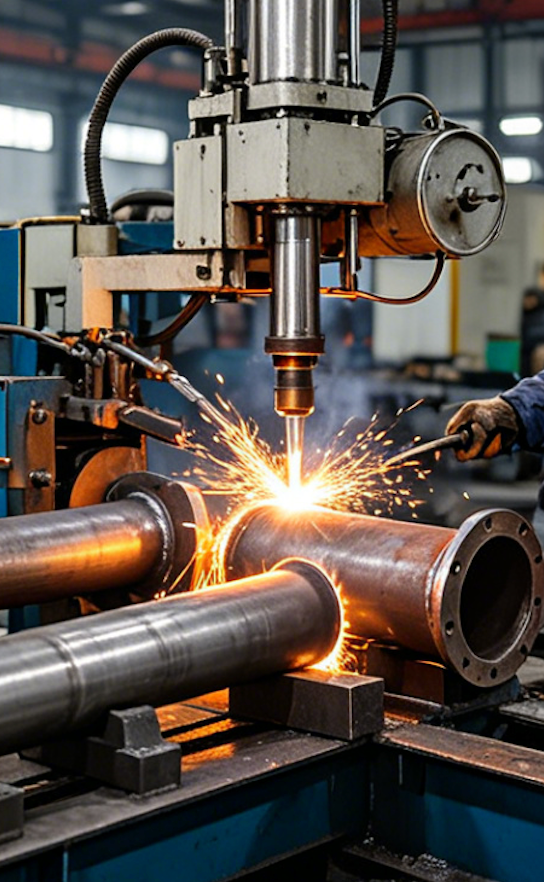
Double-layer elbows can be specified in multiple angles and bend radii. Elbows are the highest-wear location in most delivery lines, which is why double-layer construction is chosen for high-rise and long-distance work, and why the geometry has to be locked rather than approximated.
The recommended practice is straightforward: whichever angle and radius is accepted on the first order becomes the reference for every later order, recorded on the drawing and on the purchase order. A buyer who changes elbow angle between shipments to suit a site change should treat that as a new specification, not as a variant of the old one. Mixing angles within a single program quietly changes pressure behaviour and wear distribution across the whole line.
Cast and forged construction, shot-blasted and anti-rust-treated clamps
Clamps are supplied in cast and forged construction, then shot-blasted and treated against rust. The construction choice affects how a clamp behaves under repeated assembly and disassembly, which is the real duty cycle on a site where lines are broken and rebuilt between pours. Shot blasting and anti-rust treatment are not decorative finishing steps: on projects where clamps sit in yard stock or on a humid site between phases, surface condition determines whether a clamp is still serviceable when it is next pulled from the rack.
For a long-term program, the sensible purchasing rule is to fix the construction type at the qualification stage and confirm it at inspection, because a clamp that looks identical in a photo can differ in how it was made.
Capacity, lead time and stock position
Hongchang states monthly production capacity of 50,000 meters of pipe and 15,000 pieces, a typical production lead time of 15–30 days, and a minimum order quantity of 1 piece for sample orders. Production planning and safety stock are used to protect delivery schedules, with 30% buffer stock held for common sizes — a structure that matters more to a repeat buyer than to a first-time buyer, because the buffer is what absorbs an unplanned line failure between scheduled shipments.
Quality control and after-sales support
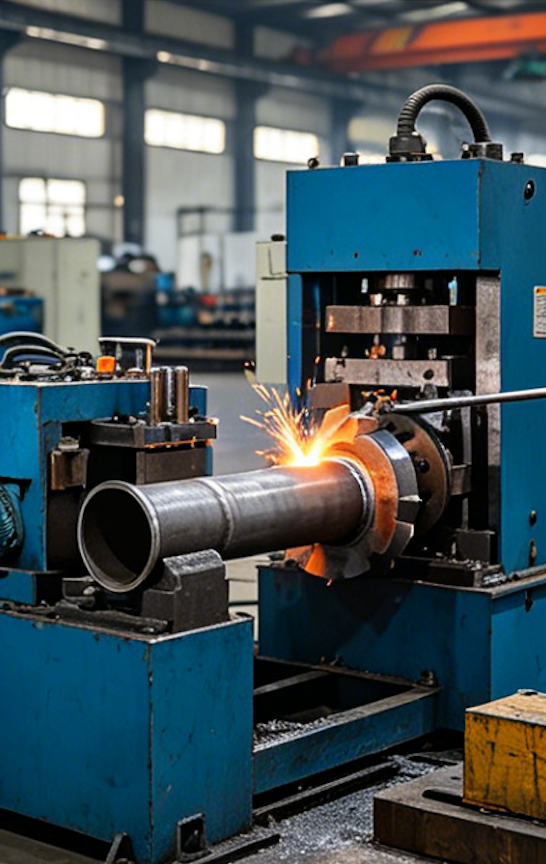
Quality control runs through multiple checkpoints with 100% inspection, pressure testing and hardness verification, supported by raw material testing and supplier qualification. A certificate of quality is issued for each batch. On the support side, the arrangement includes technical documentation, installation guidance, spare parts supply, and 24/7 remote support — the components a buyer actually uses when a line underperforms at 2 a.m. rather than during a supplier presentation.
The honest limitation is that no supplier-side claim replaces a buyer's own acceptance test. Pressure, hardness and weld quality should be confirmed against the agreed criteria, and where independent evidence is required, third-party testing can be arranged before shipment.
Step-by-step: setting up a repeat-order specification
The sequence below converts a first trial order into a specification that can be re-ordered without re-negotiation.
- Map the line. List every diameter in use across projects, with the clamp type currently fitted to each. Most duplication problems become visible at this step.
- Fix the clamp platform. Confirm clamp model 150A coverage for DN100–DN150 lines and identify the non-standard connections that require customization. Approve the customized version once and record it.
- Specify transitions and bends. Write reducer pipe 150-125 L=1200 into the high-rise step-down positions, and record each double-layer elbow by angle and radius.
- Define the straight pipe line item. Confirm straight pipe 150 L=3000 by diameter, length, material and construction, and state which of these will be verified at inspection.
- Agree purchasing terms and acceptance criteria. Set MOQ, delivery terms, payment terms, pre-shipment inspection and any third-party testing in writing before the first production run.
- Plan the repeat cycle. Agree the buffer stock position for common sizes, confirm the 15–30 day lead time against the project calendar, and nominate the technical contact for after-sales support.
Where a fixed fit standard pays off
High-rise conveying. Vertical lines combine elevation, pressure and frequent elbow wear. A reducer pipe 150-125 L=1200 at the step-down, double-layer elbows at the bends, and a single clamp platform across DN150 and DN125 sections keep the riser consistent between floors and between projects.
Tunnel construction. Long runs and difficult access make unplanned stoppages expensive. Straight pipe 150 L=3000 reduces the number of joints per metre of line, and a buffer stock of common sizes protects against a mid-drive failure.
Ground pump and trailer pump lines. Stationary pumps stay on site longer and are rebuilt more often, so clamp durability and anti-rust condition become the limiting factors rather than pipe wear alone.
Vehicle pump fleets. Hongchang pipes are described as compatible with pump trucks and tow pumps from Sany Heavy Industry and Zhonglian Heavy Industry, and the company is a designated supporting manufacturer for Xingma Automobile. For fleets running mixed equipment, one clamp platform and one elbow geometry standard simplify both stores and maintenance planning.
Distributor and stockist programs. A distributor carrying several diameters benefits most from fit consolidation: fewer SKUs on the shelf, a smaller dead-stock risk, and the ability to serve a customer's emergency requirement from buffer stock rather than from a new production order.
Comparison: wear-resistant construction versus generic pipe on a repeat order
The table below compares Hongchang wear-resistant pipe with generic concrete pump pipe on the measures that determine repeat-order economics. Values are limited to the recorded comparison basis; they are relative figures, not absolute service-life guarantees for any specific site.
| Measure | Hongchang wear-resistant pipe | Generic concrete pump pipe |
|---|---|---|
| Service life | 2–3× longer service life | Baseline |
| Lifespan differential | 30% longer lifespan | Baseline |
| Wear rate | 20% lower wear rate | Baseline |
| Hardness | Higher hardness; better heat treatment, higher HRC hardness | Baseline |
| Initial cost | 15% higher initial cost | Baseline |
| Maintenance frequency | Reduced maintenance frequency | Baseline |
| Downtime | Less downtime | Baseline |
The comparison is only meaningful if the specification is repeated. A 15% higher initial cost is recovered through longer replacement intervals and fewer line stoppages, but only when every reorder matches the qualified construction. That is the commercial argument for treating repeat-order specification discipline as part of the purchase, not as an administrative detail.
Component reference for repeat supply
| Component | Reference specification | Role in a long-term supply arrangement |
|---|---|---|
| Clamp model 150A | Fits DN100–DN150; customizable | Single fit platform across mixed diameters; reduces spare-part variety |
| Reducer pipe 150-125 L=1200 | DN150 to DN125 transition, 1,200 mm overall length | Controlled step-down on high-rise pumping lines |
| Straight pipe 150 L=3000 | DN150 straight section, 3,000 mm length | Largest repeat-order volume item; must be re-verified at inspection |
| Double-layer elbow | Multiple angles and bend radii | Highest-wear position; geometry must repeat exactly |
| Clamp construction | Cast and forged; shot-blasted and anti-rust treated | Repeated assembly and yard-stock durability |
FAQ: fit, repeat orders and after-sales support
What purchasing terms and acceptance criteria should a repeat concrete pump pipe order include?
Repeat orders are usually placed on an MOQ of 1 piece for sample orders, with delivery terms of FOB, CIF or EXW, and payment of 30% deposit with 70% before shipment by T/T or L/C. Acceptance criteria should cover pre-shipment inspection and, where required, third-party testing through SGS or BV. A certificate of quality is provided for each batch, so the acceptance criteria agreed at qualification can be checked against a documented result on every later shipment rather than against a visual impression.
Does clamp model 150A fit every line from DN100 to DN150, and can it be customized?
Clamp model 150A is specified to cover DN100 through DN150 pipe ends and can be customized where a line requires a non-standard arrangement. That coverage is the main reason a mixed-diameter program can consolidate to one clamp platform instead of stocking separate families for each diameter. Customization is agreed at specification stage, recorded, and then repeated on later orders, so a site does not have to re-confirm the connection every time a line is rebuilt. Clamps are supplied in cast and forged construction and are shot-blasted and anti-rust treated.
How should straight pipe 150 L=3000 and double-layer elbows be specified so repeat orders match?
Straight pipe 150 L=3000 should be specified as a DN150 section in a 3,000 mm length, with material and construction stated on the purchase order and verified at inspection, because external dimensions alone do not reveal wall thickness, grade or heat treatment. Double-layer elbows should be specified by angle and bend radius, with the angle and radius accepted on the first order written into the drawing as the reference for all later orders. Reducer pipe 150-125 L=1200 should be specified by both end diameters and the 1,200 mm overall length, since a differently tapered reducer changes flow behaviour without changing its outside appearance.
What are the minimum order quantity and lead time for repeat supply?
The minimum order quantity is 1 piece for sample orders. Typical production lead time is 15–30 days, against a monthly production capacity of 50,000 meters of pipe and 15,000 pieces. For ongoing programs, production planning is supported by safety stock, with 30% buffer stock held for common sizes so that an unplanned line failure does not have to wait for a full production cycle. Buyers planning multi-project sourcing should align the lead time with their site calendar rather than with the date the stock actually runs out.
What after-sales support comes with a long-term concrete pump pipe supply agreement?
Support covers technical documentation, installation guidance, spare parts supply and 24/7 remote support, alongside batch-level quality certification and the option of third-party pre-shipment testing. In practice, that combination is what a buyer uses when a line underperforms on site: the documentation to check the specification, the remote contact to diagnose the issue, the spare parts to replace the failed item, and the buffer stock to shorten the wait. Buyers who want to test the fit and finish before committing to a repeat program can request a sample of clamp model 150A, reducer pipe 150-125 L=1200, straight pipe 150 L=3000 or a specified double-layer elbow.
Conclusion: the specification is the contract
Long-term concrete pump pipe supply works when the fit standard, the geometry and the acceptance criteria are treated as fixed assets rather than as per-order decisions. Clamp model 150A covering DN100–DN150 gives a mixed-diameter program one fit platform; reducer pipe 150-125 L=1200 gives high-rise lines a controlled step-down; straight pipe 150 L=3000 and double-layer elbows in defined angles and radii give the repeat volume a stable reference. Cast and forged, shot-blasted, anti-rust-treated clamps keep the connection side of the line serviceable between phases.
Next step for multi-project sourcing: send your line list — diameters, elbow angles and radii, reducer positions and annual repeat volumes — and request a sample or quotation matched to that specification. Hongchang Machinery Technology Co., Ltd., No. 2063, Hongqi South Road, Development Zone, Ma'anshan City, Anhui Province, China. Tel/WhatsApp: +86-13301770177. Email: chenzhen@hongchangpumpipe.com. Website: hongchangpumpipe.com.
Have Questions or Need More Details?
Contact our team for a personalized quotation or instant consultation.
Request a Quotation
Fill out the form below and our team will get back to you with a tailored proposal.
WhatsApp Direct Chat
Prefer to chat in real-time? Message us on WhatsApp for instant assistance & quick answers.
- Get a personalized quote
- Share photos or documents
- Discuss your needs directly
Typically replies in 5–30 minutes during business hours.