A Procurement Guide to Concrete Pump Pipes: Matching Supplier Capabilities with Project-Specific Demands
1. Industry-Specific Requirements for Concrete Pump Pipes
Different construction and mining environments place distinct demands on concrete pump pipes. Selecting the wrong type can lead to frequent downtime, increased maintenance costs, and safety risks. Below are the most common application scenarios and their core requirements:
High-Rise Building Concrete Pumping
In high-rise construction, concrete pump pipes must withstand continuous operation of 8–12 hours per day under high pressure. Wear resistance is critical because the abrasive concrete mixture accelerates internal erosion. Pipes used in these scenarios require pump truck integration and a hardened inner surface to maintain consistent flow and longevity.
Tunnel Construction
Tunnel projects demand heavy-duty concrete pump pipes capable of frequent direction changes (90° to 180°). The pipes must exhibit exceptional abrasion resistance due to the sliding friction of concrete against the inner wall. Supporting equipment such as concrete pump systems must be compatible with the chosen pipe design to ensure reliable directional delivery.
Mining Operations
In underground mining, concrete injection and slurry transportation occur 24/7. Pipes must resist both corrosion from chemically active slurries and wear from continuous material flow. A slurry pump system is typically required, and the pipes themselves must be designed with corrosion-resistant alloys or specialized heat treatment for durability.
Bridge Construction
Bridge projects often involve precise pipe diameter transitions at medium pressure. The special requirement here is a precision fit between pipe sections and connection fittings. Any misalignment can cause leaks or pressure drops in the concrete delivery line.
2. Supplier Selection Criteria – 3 Must-Have Capabilities
To ensure long-term reliability and cost efficiency, buyers should screen potential concrete pump pipe suppliers against three core capabilities:
2.1 Industry-Specific Customization Experience
A supplier must demonstrate a track record of customizing pipes for different applications – from high-rise to tunnel to mining. This includes the ability to adjust dimensions (length, diameter, bend radius), material selection (carbon steel, cast steel, alloy steel), and surface treatment (quenching, shot blasting, anti-rust primer). Hongchang Machinery Technology Co., Ltd., for instance, has provided custom pipe solutions for equipment OEMs, mining companies, and construction firms, adapting specifications such as 90° elbows with R275 bend radius or reducers from DN150 to DN125.
2.2 Compliance Certifications
Adherence to international quality standards is non-negotiable. A supplier holding ISO 9001 certification (e.g., Hongchang Machinery – certificate number ISO-2024-HC, valid until 2028-11-12) indicates that the manufacturing process – from raw material inspection to final pressure testing – follows a systematic quality management system. For projects in regulated markets (EU, Middle East, etc.), third-party testing such as SGS or BV inspection is often requested; top suppliers should offer this option.
2.3 Durable Design for Harsh Environments
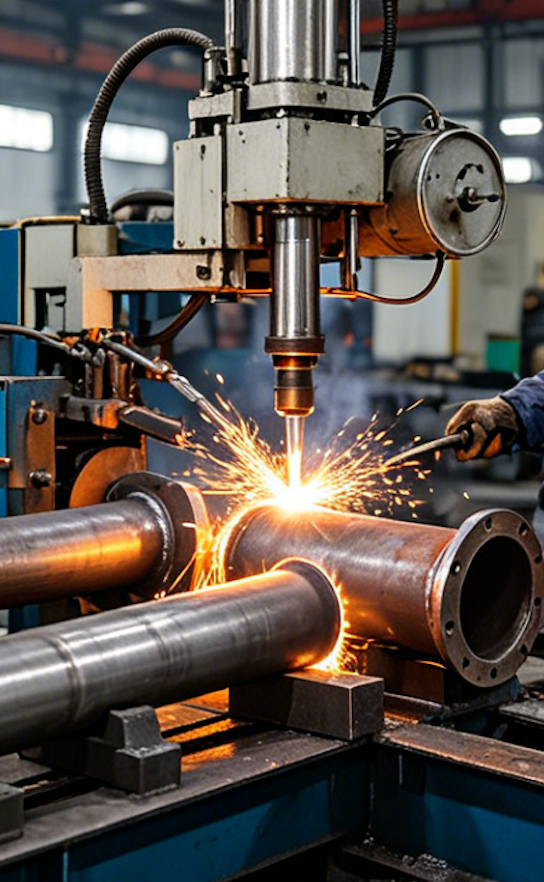
The ability to withstand extreme conditions is a differentiator. Key technical features include inner wall quenching (achieving HRC 55–62 hardness), double-layer or alloy wear-resistant construction, and heat-treated cast steel for elbows. These design elements directly translate to 2–3 times longer service life compared to generic pipes, as validated by field performance from users such as a construction company that reported stable operation and 30% longer lifespan on a high-rise project.
3. Real-World Success Case: China-Based Supplier in Action
Client profile: A mid-sized construction company involved in high-rise building projects in Southeast Asia.
Challenge: Frequent pipe failures under continuous high-pressure pumping, causing average downtime of 3 hours per week.
Solution: Hongchang Machinery supplied 50 units of DN150 straight pipes and double-layer elbows with quenched inner walls (HRC 58–62). The pipes were integrated with the client's pump trucks, and the supplier provided on-site installation guidance and spare parts support.
Result: Over 3 years of operation, the client achieved stable concrete delivery with 30% longer pipe lifespan compared to previous generic products. Maintenance frequency dropped by 40%, reducing total cost of ownership.
Additional case: A mining company in South America purchased 100 meters of wear-resistant straight pipes for underground slurry transportation. After 4 years of 24/7 operation, the client reported reduced maintenance by 40% and credited the heavy-duty design and corrosion resistance for the performance.
4. Cooperation Recommendations for Procurement Professionals
To maximize the value of a concrete pump pipe partnership, consider the following key points during the sourcing process:
- Define industry standards upfront: Clearly specify the applicable standards for your project (e.g., ISO 9001, required hardness range, connection type). Share the working conditions (pressure, operating hours, material abrasiveness) so the supplier can recommend the optimal pipe grade.
- Request on-site or remote assessment: For complex projects (tunnel or mining), have the supplier's technical team evaluate the existing pump system layout, pipe routing, and pressure points. Hongchang Machinery offers remote troubleshooting and installation guidance as part of its after-sales service.
- Verify quality control procedures: Ask for certificates of quality per batch, check hardness (HRC) test reports, and confirm that 100% of products undergo dimensional check and pressure testing. Third-party inspection (SGS/BV) can be arranged if required.
- Plan for after-sales support: Ensure the supplier provides technical documentation, spare parts supply, and a responsive communication channel. Export markets served include Southeast Asia, Middle East, Europe, and Americas – choose a supplier with a global logistics network.
- Leverage sample orders: Most reputable suppliers accept a minimum order quantity of just 1 piece for sample evaluation. This allows you to test fit, performance, and wear before committing to bulk quantities.
Bottom line: A systematic approach – matching project specifics with supplier experience, certification, and design robustness – reduces procurement risk and ensures a concrete pump pipe system that delivers consistent performance over years of demanding use.
Have Questions or Need More Details?
Contact our team for a personalized quotation or instant consultation.
Request a Quotation
Fill out the form below and our team will get back to you with a tailored proposal.
WhatsApp Direct Chat
Prefer to chat in real-time? Message us on WhatsApp for instant assistance & quick answers.
- Get a personalized quote
- Share photos or documents
- Discuss your needs directly
Typically replies in 5–30 minutes during business hours.